
Maths and numbers
Counting on fingers long after friends have stopped, times tables that won’t stick, worry as soon as maths comes out. Hands-on games and small steps rebuild understanding and confidence.
Try this now
3 ten-minute ideas for maths
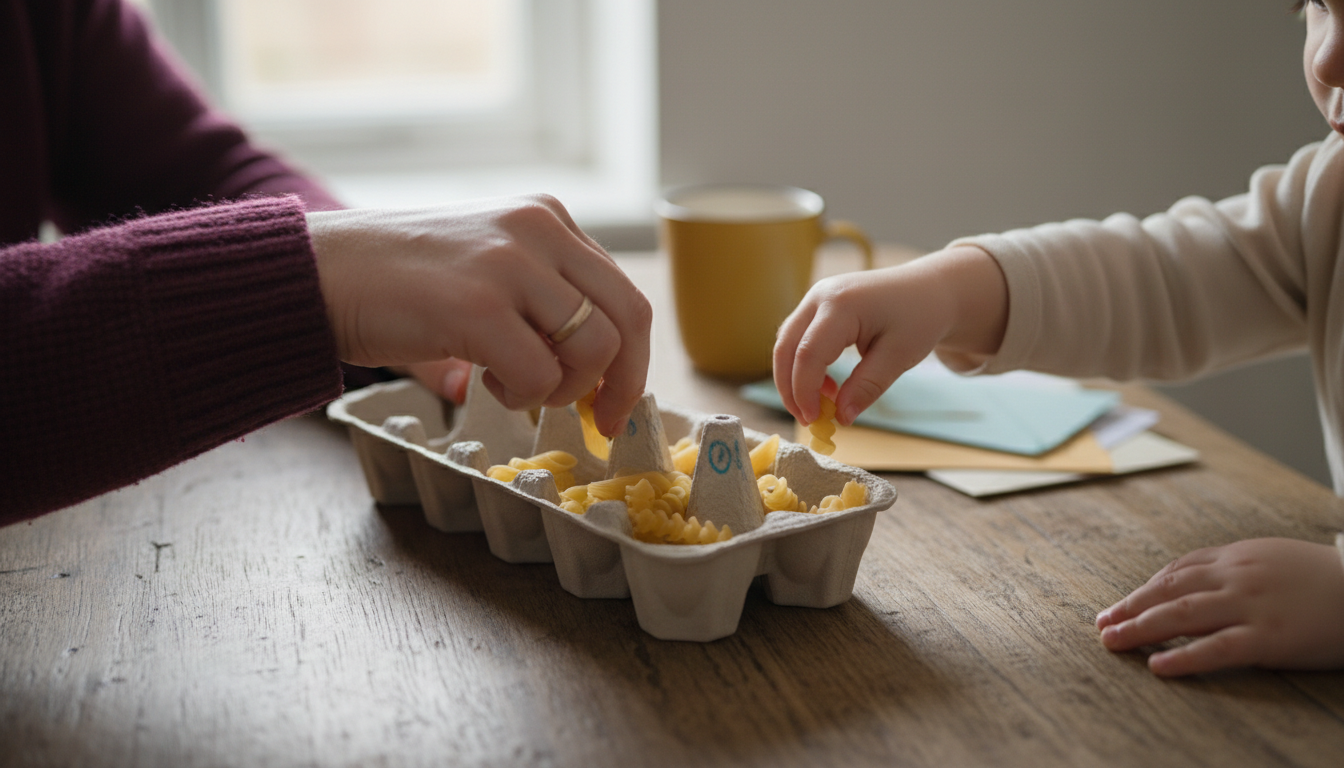
- Play the ten-frame game. Use an egg box with 10 spaces and some pasta. Put some in and ask: “How many more to make 10?”
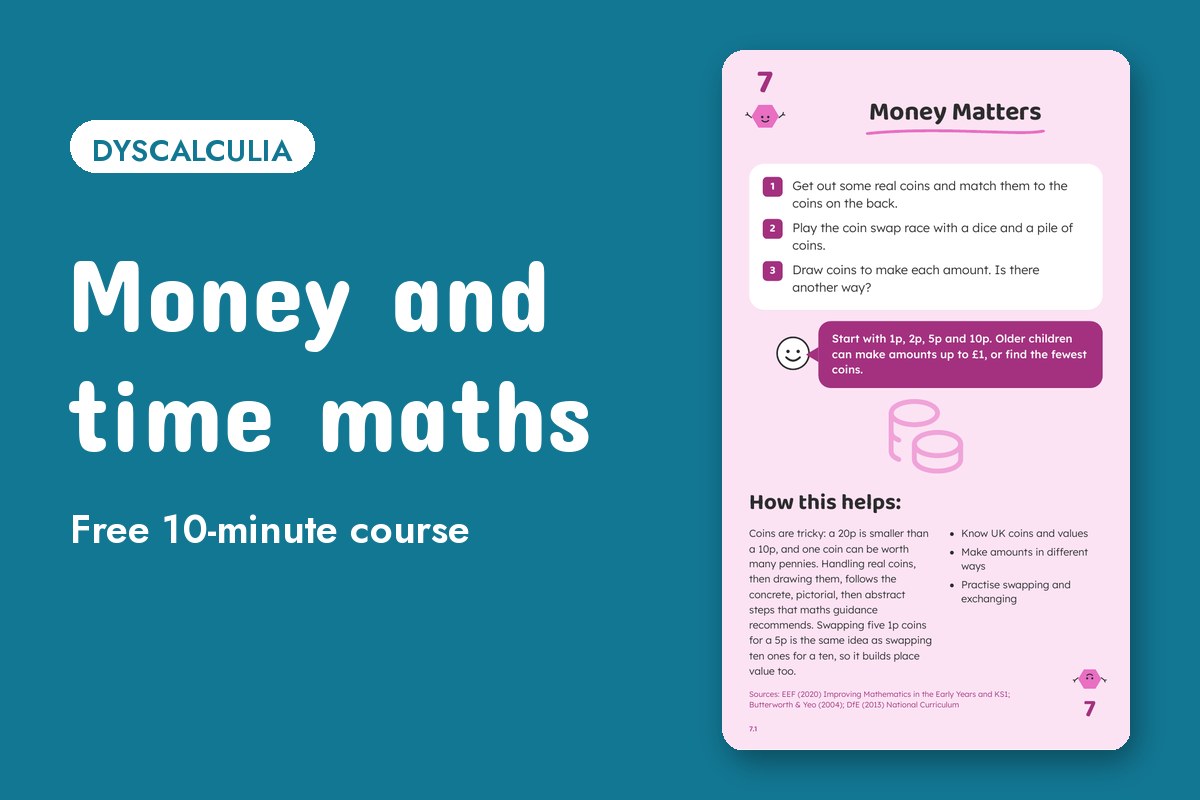
- Do real-life maths. Count change at the shop, weigh ingredients for baking, or read the clock together.
- Sing one times table. Pick one table and sing or chant it once a day for a week.
All three ideas are on Mooki cards, with simple steps on the front and a child-friendly activity on the back.
Help for your child’s need
DyscalculiaBuild number sense first, then speed→AnxietyWorry can block maths. Keep it calm and playful→DyslexiaTimes tables and telling the time can be tricky too→ADHDKeep maths homework short, with breaks→
Not sure what’s behind it? Could it be SEN?
Get the Mooki Cards
56 ten-minute activities for the hardest moments, from mornings to meltdowns. Try a free starter pack with the code HELPEVERYCHILD until 31 January.
You’re not on your own
Join our free Facebook group, where SEN parents share what’s working, one small win at a time.
Need more support at school? Getting help from school: SEN support, EHCPs and 504s →
Free 10-minute courses
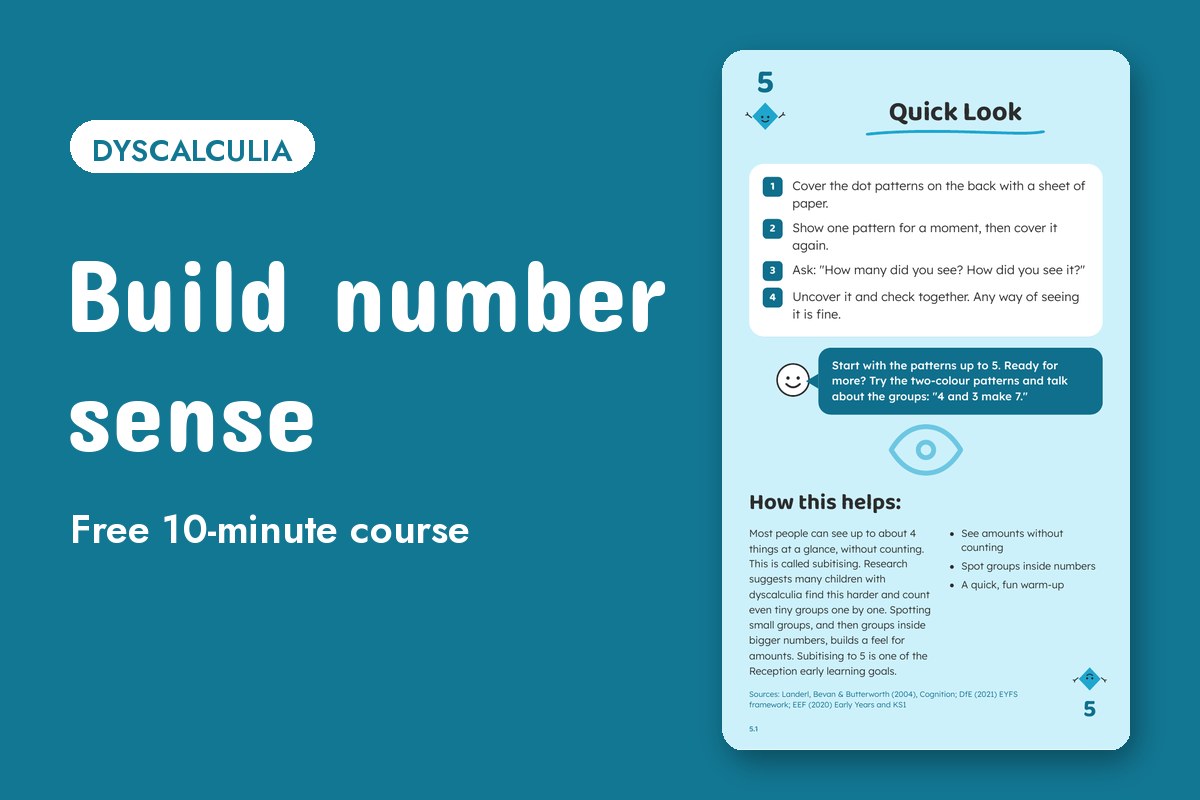
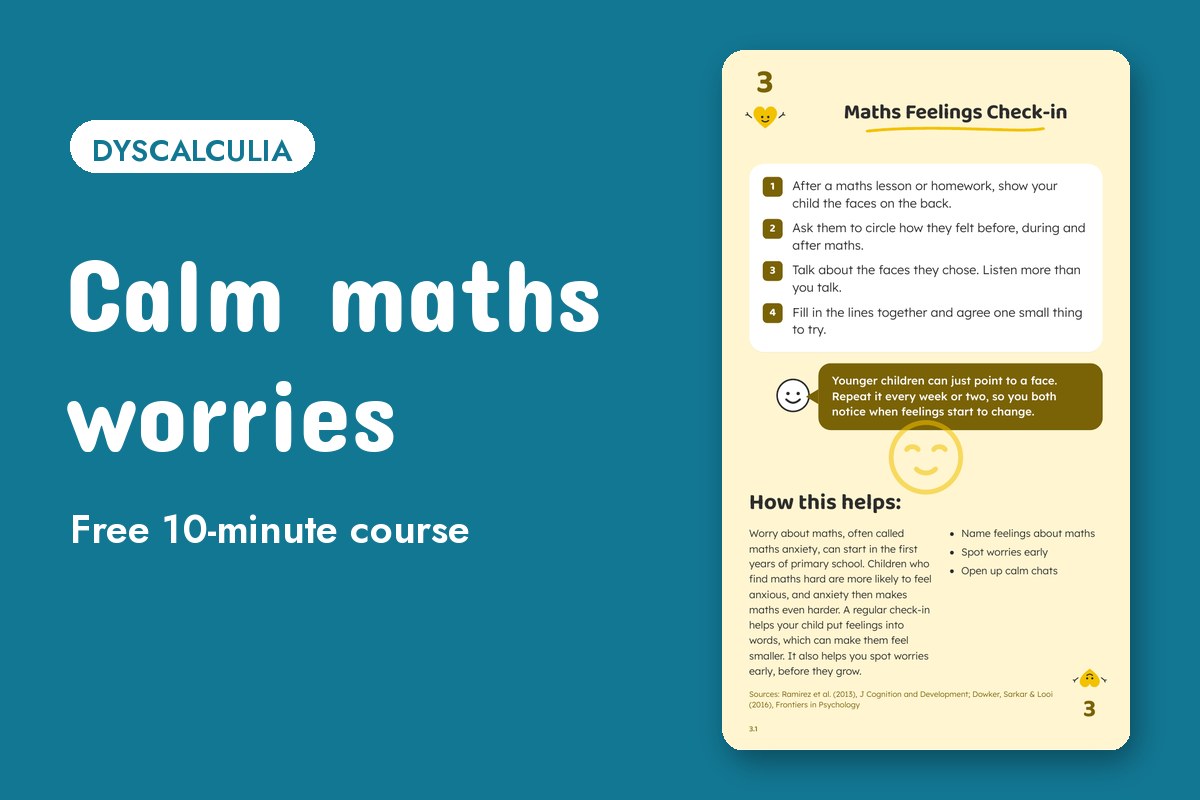
Short activities over a week, with free printable worksheets.
More help with maths and numbers
-
Is Dyscalculia a Learning Disability? SEN and SLD Explained
-
What Causes Dyscalculia? Genetics, the Brain and Myths
-

Dyscalculia Strategies for the Classroom: A Teacher’s Toolkit
-
Which maths activities work for pupils with SEMH needs in EYFS to Year 2?
-
Maths Homework Help: Tips for Parents Without the Tears
-
Times Tables and Dyscalculia: Tips That Really Work
-
Number Sense Activities for Kids Who Find Maths Hard
-
Maths Games for Kids With Dyscalculia: 15 Fun Ideas for Home
-
Dyscalculia or Just Behind in Maths? When Parents Should Worry
-

Early Signs of Dyscalculia in Preschool and Reception Children
-

Maths Anxiety or Dyscalculia? How to Tell the Difference in Kids
-
How to Help a Child With Dyscalculia: What Support Really Works