
Help a child with dyscalculia get a real feel for numbers, using dots, ten frames and objects. 3 short activities, 10 minutes each, over 1 week.
At a glance
- Time: 3 activities, 10 minutes each, over 1 week
- You need: a sheet of paper, 10–20 small objects (counters, coins, buttons or dry pasta), a pencil, and the 3 free worksheets below
- Mooki cards: Quick Look, Ten Frames, Number Bonds (optional)
- By the end: the child will be seeing small amounts without counting, and splitting numbers up to 10 in different ways
Why number sense?
Number sense is a feel for how many things there are. Many children with dyscalculia find it hard to see small amounts at a glance, so they count even tiny groups one by one.
If 7 doesn’t feel like an amount, sums have to be learned without meaning, which is much harder. Hands-on games with real objects and pictures help build that missing feel.
Mooki Cards are not a replacement for medical advice. If you are worried about your child, talk to your GP, health visitor or the school SENCo.
Before you start
- Print the worksheets. Or draw your own on plain paper.
- One a day. Do each activity on a different day so the child doesn’t feel overwhelmed.
- Get your objects ready. Counters, coins, buttons or dry pasta all work.
- Any way is fine. Ask “How did you see it?” There is no wrong way of seeing a number.
Day 1: How many can you see?
Helps the child see small amounts without counting. Uses the Quick Look card.
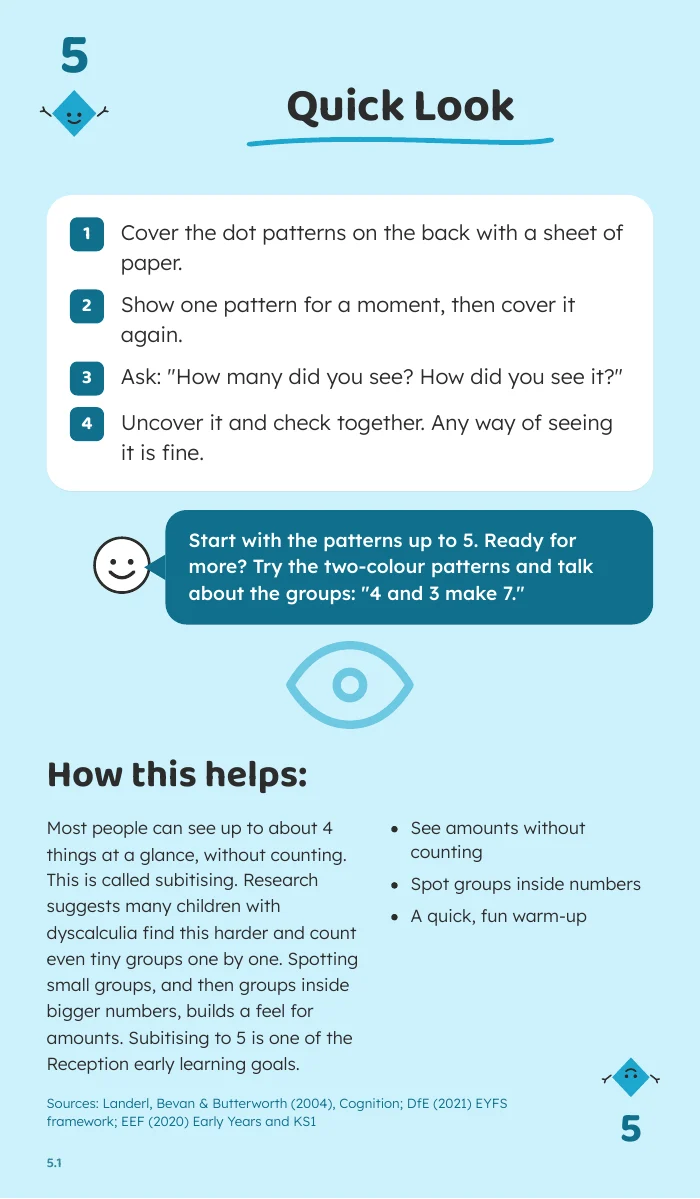
- Peek and say. Cover the dots with paper. Show one box for a moment, then cover it again. Ask: “How many did you see?” The child writes the number in the small box.
- How did I see it? Ask: “How did you see it?” Uncover it and check together. The child draws the groups they saw and fills in “I saw __ and __ make __”.
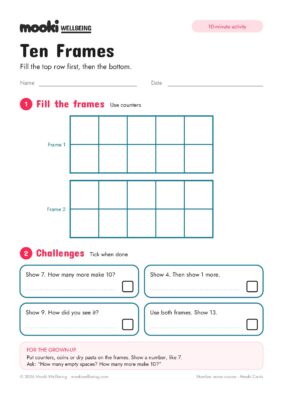
Tip: start with the patterns up to 5. Ready for more? Try the two-colour patterns and talk about the groups: “4 and 3 make 7.”
Day 2: How many more make 10?
Helps the child see numbers as fives and tens. Uses the Ten Frames card.

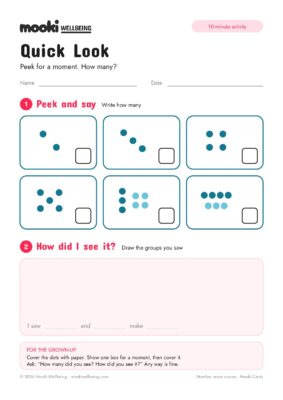
- Fill the frames. Put counters, coins or dry pasta by the sheet. Ask the child to show a number, like 7, filling the top row first. Ask: “How many empty spaces? How many more make 10?”
- Challenges. Try the 4 challenges together, using the frames. Tick each one when it’s done.
Tip: talk about what you both see: “7 is 5 and 2 more.” Harder: use both frames to show numbers up to 20, like 13.
Day 3: How can you split a number?
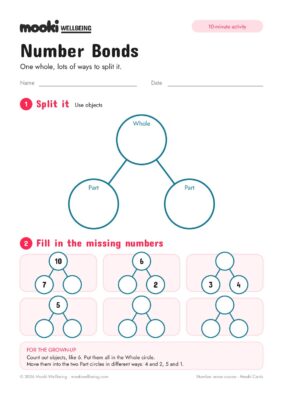
Helps the child see how numbers split up and go back together. Uses the Number Bonds card.
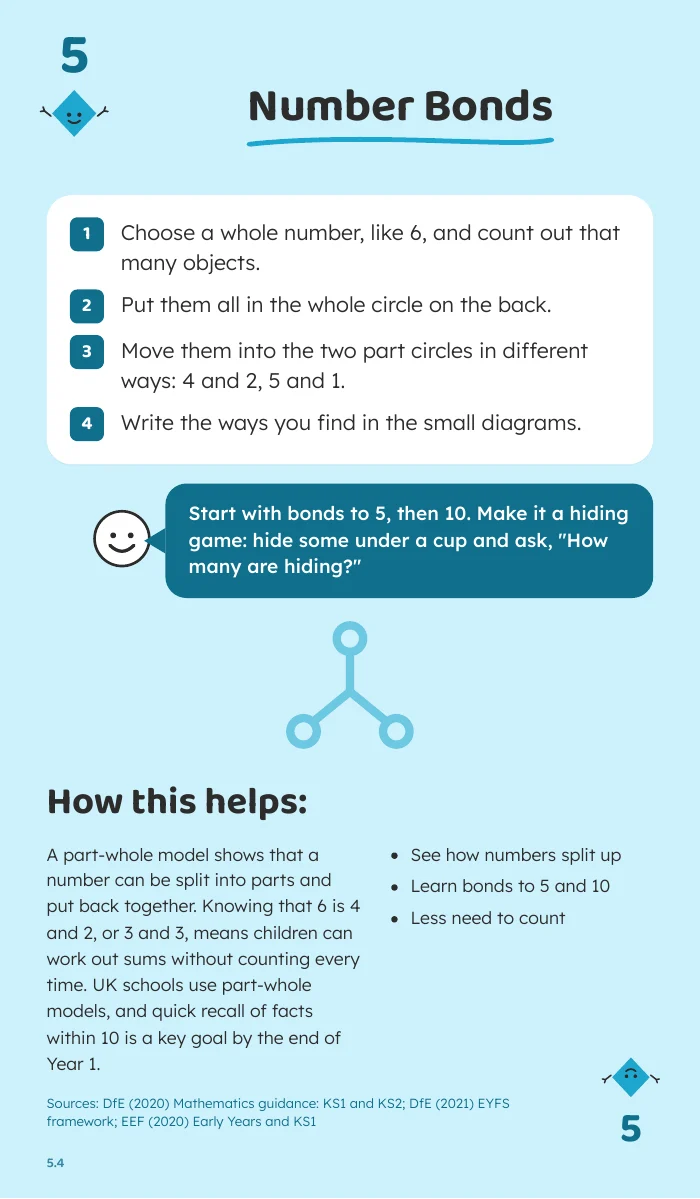
- Split it. Choose a whole number, like 6, and count out that many objects. Put them all in the Whole circle. Move them into the two Part circles in different ways: 4 and 2, 5 and 1.
- Fill in the missing numbers. Work out the missing numbers in the small diagrams together. Use the objects if it helps. Write your own splits in the empty ones.
Tip: start with bonds to 5, then 10. Make it a hiding game: hide some under a cup and ask, “How many are hiding?”
After the week: ask yourself
- Which amounts can the child now see without counting?
- Can they say how many more make 10?
- Which splits of 5 or 10 do they know, and which need more practice?
Get all 3 activities, plus 53 more
The Quick Look, Ten Frames and Number Bonds cards give you ready-made steps on the front and a picture activity for your child on the back. Everything is in one place. Each is one of 56 ten-minute activities in the Mooki Cards Dyscalculia deck.
Instant download · use on a phone or tablet, or print and fill in