If you’ve wondered what causes dyscalculia, and whether something you did played a part, this post is for you. Here is a plain-English summary of what research says about the brain, genes and early birth, plus the myths you can safely let go of.
First, the most important point: dyscalculia is not caused by laziness, low intelligence or poor parenting. It is a difference in how the brain handles numbers.
What is dyscalculia?
Dyscalculia is a lasting difficulty with understanding and working with numbers. The British Dyslexia Association describes it as linked to processing difficulties that affect maths (math) skills, such as comparing and ordering amounts.
It is fairly common. A large study in Northern Ireland by Morsanyi and colleagues tested 2,421 primary school children and found that about 6% had persistent, severe maths difficulties. You can read the summary of the Queen’s University Belfast study. It also found boys and girls were affected equally.
The dyscalculia brain: what scientists have found
Experts see dyscalculia as a neurodevelopmental difference, meaning it relates to how the brain grows and develops. Understood’s guide to dyscalculia explains this clearly.
Much of the research points to an area near the top and back of the brain called the intraparietal sulcus. Professor Brian Butterworth and Diana Laurillard describe this as the key area for processing numbers in their 2010 paper on low numeracy and dyscalculia. A UCL brain imaging study also found this area was busy when people worked out “how many” things they could see.
It is worth being careful here. Brain studies of dyscalculia are often small, and scientists are still working out the full picture. What we can say is that the brain of a child with dyscalculia seems to process number in a different way, especially the basic sense of “how many”.
Is dyscalculia genetic?
Dyscalculia often runs in families, so genes seem to play a part. Some of the evidence:
- Family studies: in a small Israeli study from 2001, about half of the brothers and sisters of children with dyscalculia also had it, nearly ten times the rate expected in the general population. See the family study abstract.
- Twin studies: identical twins tend to be more alike in number skills than non-identical twins, as Butterworth and Laurillard note.
Researchers have not found a single “maths gene”. Genes seem to work together with a child’s experiences. So if you or your partner found maths hard, that may be part of the story, but it is no one’s fault.
Does home life or schooling matter?
The BDA notes that a child’s environment, and any other difficulties they have, can affect how maths difficulties show up. That doesn’t mean home or school caused the dyscalculia. It means that good support, calm practice and plenty of number play can make a real difference to how a child copes.
Think of it like eyesight. You didn’t cause your child to need glasses, but you can make sure they get the right pair. In the same way, you can’t change how your child’s brain handles numbers, but you can change the help around them.
Try it today: notice how your child sees numbers
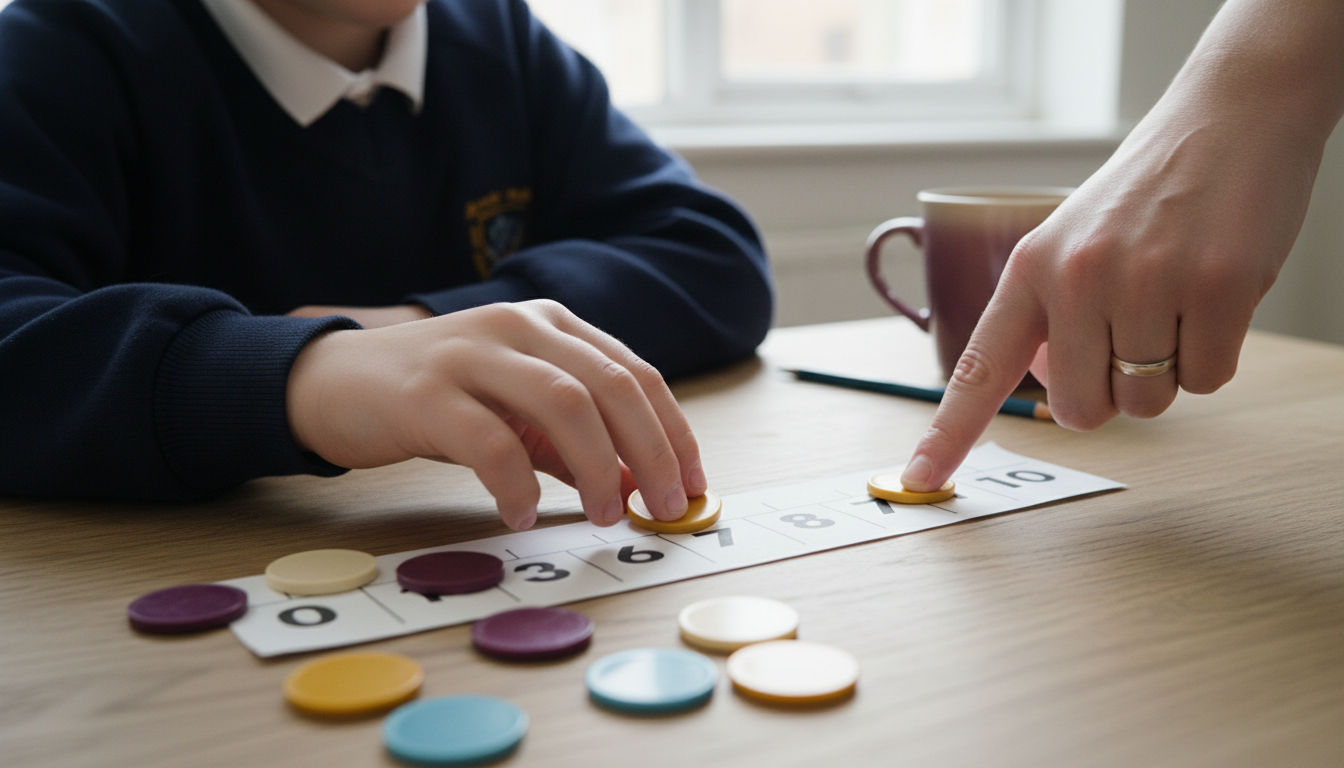
Understanding the cause matters less than understanding your child. Spend 10 minutes on this simple game.
- Put two small piles of buttons on the table, such as 4 and 7.
- Ask, “Which pile has more? How do you know?”
- Flash a group of 3 or 4 for two seconds and ask how many.
- Write two numbers, such as 6 and 9, and ask which is bigger.
Notice whether your child counts every item, guesses, or “just knows”. Jot down what you see. These notes are useful if you later talk to the school.
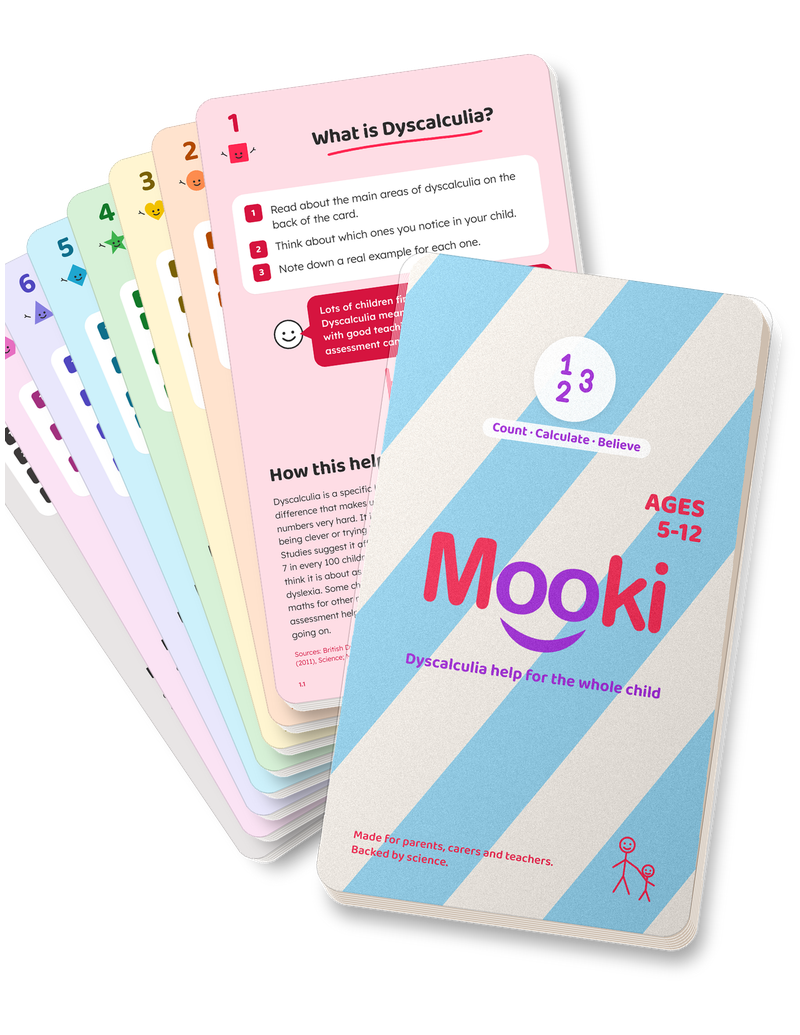
Want to help your child understand their brain?
What is Dyscalculia? and Myth Buster explain it in child-friendly words, and How I See Numbers helps your child share their experience. Each is one of 56 ten-minute activities in the Dyscalculia deck.
Instant download · use on a phone or tablet, or print and fill in at home or school
Prematurity and other dyscalculia causes
Children born very early (before 32 weeks) are more likely to find maths hard. Interestingly, a study by Simms and colleagues found that their difficulties seemed to have a different cause from classic dyscalculia. They were linked more to working memory and visual-spatial skills than to a weak sense of number. You can read the summary of the preterm maths study.
This matters because the right support depends on the reason. Other things can also make maths hard, as the BDA’s page on identifying dyscalculia explains:
- Dyslexia, dyspraxia (DCD) or ADHD.
- Maths anxiety, or a bad past experience of learning maths.
- Missing a lot of school.
- Foetal alcohol syndrome.
Common myths about what causes dyscalculia
- “It’s just bad teaching.” No. Teaching can help or hinder progress, but it doesn’t cause dyscalculia.
- “They’re not trying hard enough.” Children with dyscalculia often try very hard indeed.
- “It means low intelligence.” Dyscalculia can affect children of any ability.
- “Girls are just worse at maths.” The Morsanyi study found no difference between boys and girls.
- “They’ll grow out of it.” Dyscalculia is lifelong, but the right support helps a great deal.
What to do next
If you think your child may have dyscalculia, start by talking to their teacher. In the UK, ask to speak to the SENCo about SEN support or a specialist assessment. In the US, you can ask the school for a free evaluation under IDEA. If you’re worried about your child’s general development, your GP or paediatrician can help too.
The bottom line
Dyscalculia comes from differences in how the brain processes numbers, and it often runs in families. It is not caused by laziness, poor teaching or anything you did. What matters most now is patient, practical support, and that is something you can start giving today.