
Reading and spelling
Guessing words, mixing up letters, spellings that just won’t stick. Lots of children need more practice or a different approach, and short, fun, hands-on games work best.

Try this now
3 ten-minute ideas for reading and spelling
- Go on a sound hunt. Pick a sound and find 5 things around the house that start with it.
- Rainbow-write a tricky word. Write it 3 times in different colours, saying each letter out loud as you go.
- Share the reading. Read together for 10 minutes: you read a page, they read a line. Stop while it’s still fun.
All three ideas are on Mooki cards, with simple steps on the front and a child-friendly activity on the back.
Help for your child’s need
DyslexiaMulti-sensory practice, little and often, works best→AutismReading the words may be easy but understanding harder→Speech and languageTalking and listening games build the base for reading→
Not sure it’s dyslexia? See the common signs in children aged 5 to 10
Get the Mooki Cards
56 ten-minute activities for the hardest moments, from mornings to meltdowns. Try a free starter pack with the code HELPEVERYCHILD until 31 January.
You’re not on your own
Join our free Facebook group, where SEN parents share what’s working, one small win at a time.
Need more support at school? Getting help from school: SEN support, EHCPs and 504s →
Free 10-minute courses
Short activities over a week, with free printable worksheets.
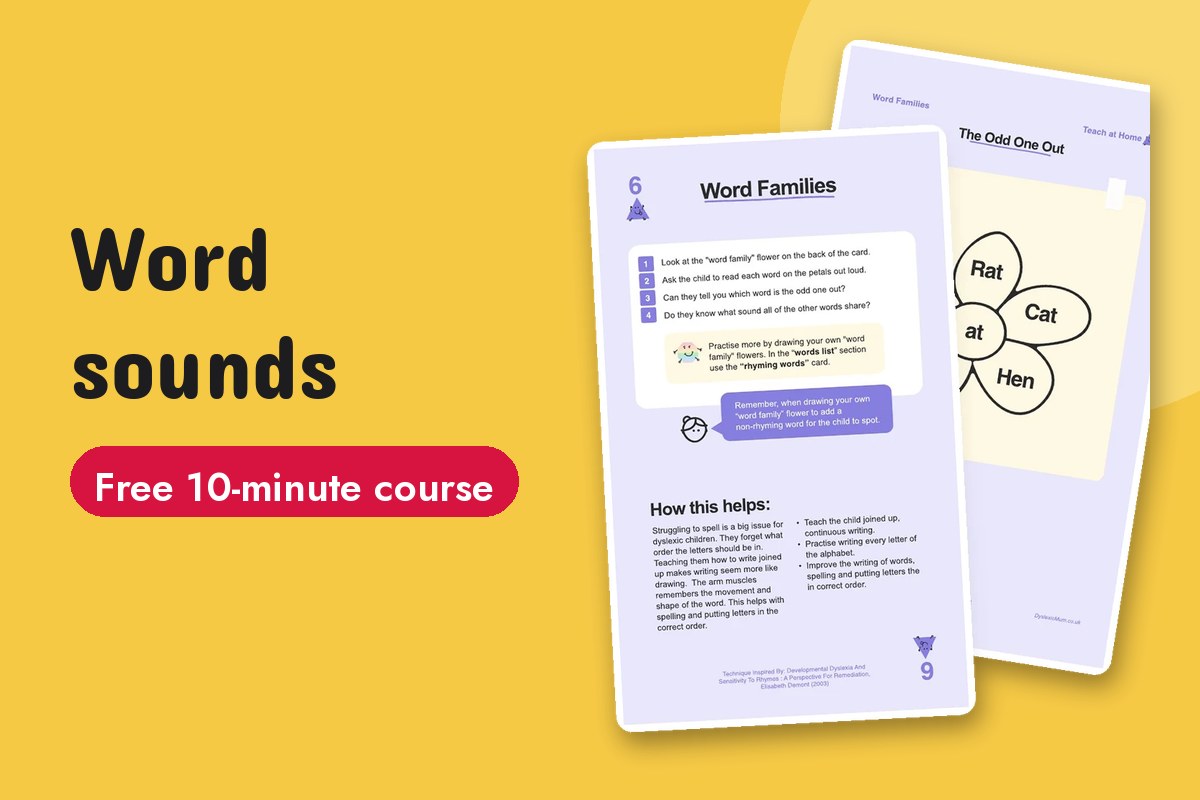
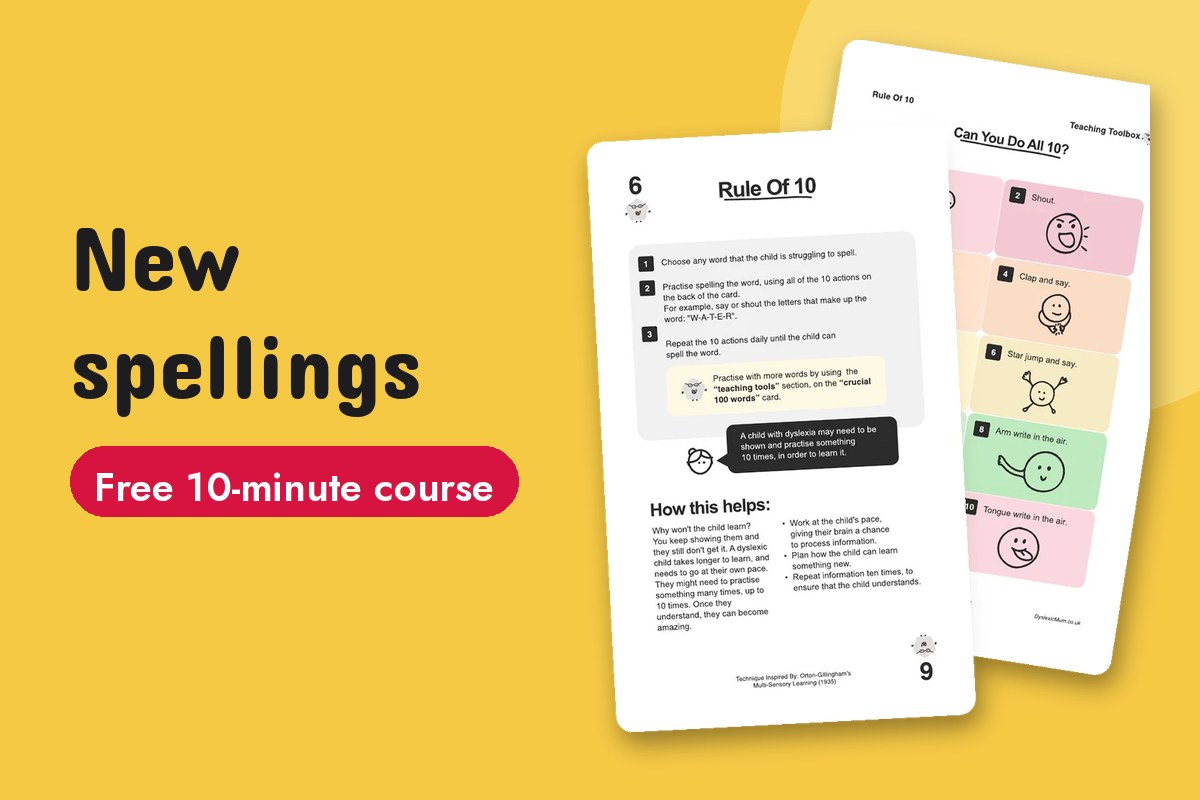
More help with reading and spelling
-
What are the best dyslexia interventions and screening tools for schools?
-
How do you teach phonics in an autism unit?
-

Which reading comprehension activities work for autistic children in KS1?
-

What should my child know in Year 2 (US 1st grade)? A reading and writing checklist for SEN parents
-
50 Words that are hard for dyslexics to read and spell
-
What colour overlay is best for dyslexia? Do overlays really work?
-
Help dyslexic child aged 8+ to write essays and stories
-
Top 10 apps for kids with dyslexia (plus free tools)
-
Using rhymes to help dyslexic children aged 6-10 spell
-

Help a dyslexic child remember spellings aged 6-10+
-
Rule of 10, learn new spellings dyslexic kids
-
Dyslexia in a child’s writing: 6 signs to look for (with examples)