Does your child lie awake worrying at bedtime? Maybe they call you back again and again, or say “I can’t stop thinking”. Bedtime can be the hardest part of the day for a worried child. The house goes quiet, and every worry feels bigger in the dark.
You can’t make worries vanish. But you can help your child put them down before bed, so they can rest.
Why do worries get worse at bedtime?
- It’s quiet. In the day, worries get drowned out. At night, they’re all your child can hear.
- They’re tired. A tired brain finds it harder to calm down.
- The day catches up. Friend troubles, school stress or something on the news.
- Saying goodnight. Being apart from you can feel scary.
- The dark. Noises and “what ifs” feel bigger.
- A worried body. A racing heart or tight tummy makes sleep hard.
The NHS guide to anxiety in children says trouble sleeping is a common sign of worry in children. And a tired child often worries more the next day, so it can become a cycle.
It’s natural to want to take every worry away. But the Child Mind Institute’s advice on anxious children is that gently helping a child face a worry works better than avoiding it. That’s what the wind-down below does: it gives worries a time and a place, so they don’t take over bedtime.
Try this tonight: a 10-minute worry wind-down
Do this before your child gets into bed. The idea is to leave the worries outside the bedroom.
- Worry time (3 minutes). Sit together, not on the bed. Ask, “What’s on your mind tonight?” Just listen.
- Write it down (2 minutes). Your child writes or draws each worry on a scrap of paper and puts it in a box or jar.
- Close the lid (1 minute). Say, “The worries are safe in here. We’ll look at them tomorrow.” Put the box outside the bedroom.
- Balloon breathing (2 minutes). Breathe in through the nose for 4, out through the mouth for 6. Do it 5 times together.
- Happy place (2 minutes). In bed, ask them to picture a favourite place and tell you what they can see, hear and smell.
Look in the worry box together the next day. Worries often look smaller in daylight.
Help for you and your child, in one parcel
The SEN Mums Journal gets you through the hard moments. The SEN Kids Toolkit gives you 20 ten-minute activities to do together. Both books for £24, save 20%.
More ways to help a worried child sleep
- Keep the same bedtime routine every night. Same steps, same order.
- Screens off an hour before bed, and no scary shows or news.
- Have worry time earlier, like after school. Our worry box guide shows you how.
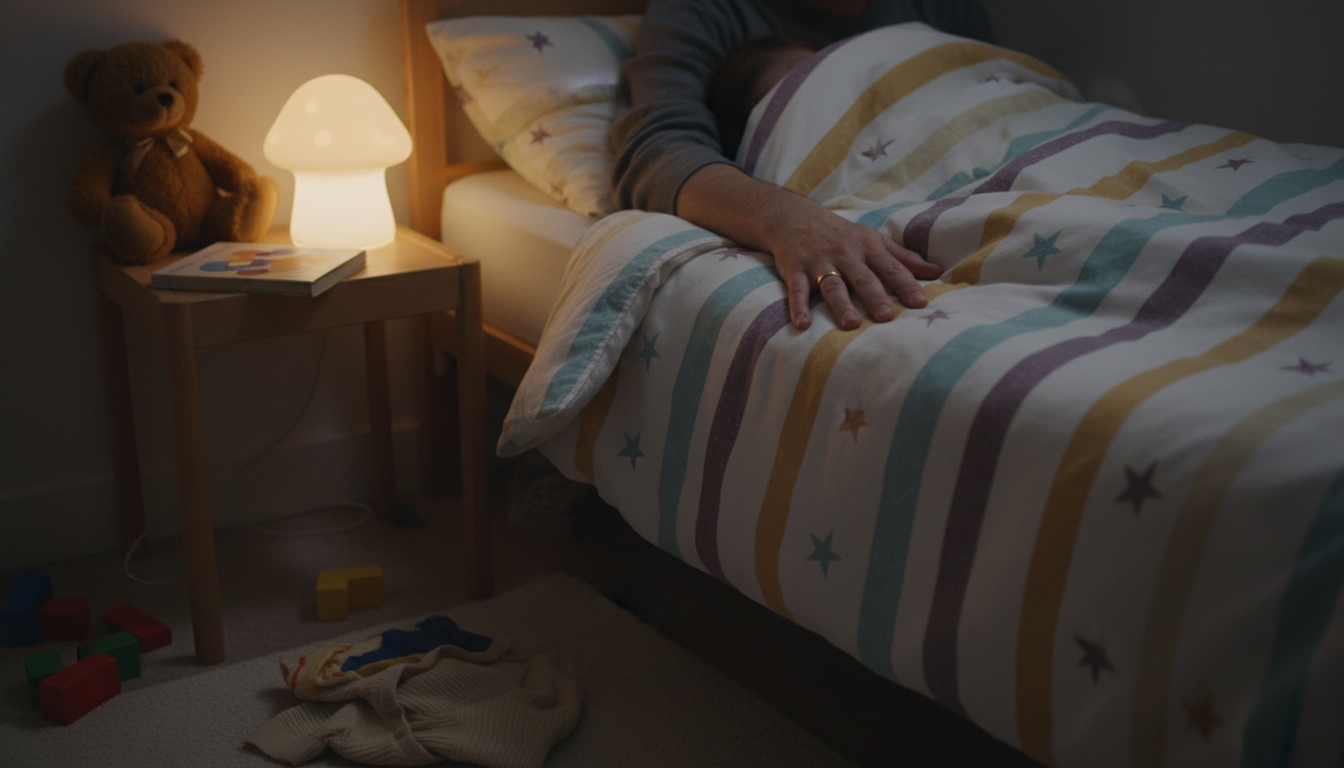
- Use a dim night light if the dark is scary.
- Keep check-ins short. “I’ll check on you in 5 minutes”, then do. Slowly make the gaps longer.
- Try a calming script, like our anxiety meditation for kids.
- Answer a worry once, then say, “That one’s for the worry box.”
Sheffield Children’s NHS has a short, practical leaflet on sleep and anxiety in young children that’s worth printing for the fridge.
If sleep is hard even without worries, see when your child does not sleep. If your child worries all day, read help for a child who worries about everything.
Could it be something more?
Most children have nights when worries keep them up. It may be worth a closer look if, most nights for a few weeks, your child:
- takes a long time to fall asleep because of worries
- can’t sleep unless you’re in the room
- gets tummy aches or headaches at bedtime
- worries a lot in the day too
- avoids sleepovers or trips because of worry
These can be signs of anxiety. Our guide to anxiety symptoms in kids and our anxiety checklist can help you spot the pattern. Children with SEN are more likely to struggle with anxiety, and the KIDS charity guide to anxiety in children with SEND explains why.
Getting help
Jot down bedtimes, wake-ups and worries for 2 weeks. It helps when you talk to someone.
In the UK: talk to your GP or your child’s school. The Sleep Charity also has a helpline. The YoungMinds guide for parents on anxiety and Anna Freud’s advice on supporting a child with anxiety are both good next reads.
In the US: talk to your pediatrician. Cleveland Clinic’s guide to anxiety in children explains the signs and treatments.
If your child talks about hurting themselves or not wanting to be here, get help straight away. In the UK, call 999 or go to A&E. In the US, call or text 988.
The bottom line
Worries get louder at bedtime when everything else goes quiet. Give worries a time and a place, calm the body, and keep bedtime the same each night. You know your child best.