3 minute read · By Collette, SEN mum and teacher
Worry rising right now? Do this.2 minutes
- Name it gently. “It sounds like you’re worried about tomorrow.”
- Breathe together. Smell the flower (in through the nose), blow out the candle (out through the mouth), five times.
- Don’t promise it won’t happen. Show that you believe they can cope.
If worries are becoming unmanageable, like hitting out, panicking or your child hurting themselves, you don’t have to cope alone. See getting extra help below.
Words that help
You’re not doing anything wrong. Anxiety is the body’s alarm system, and some children’s alarms go off more easily. It isn’t your fault.
With small, steady habits it usually gets easier. Below you’ll find simple things that help, ideas to try on a calmer day, and other parents who really understand.
What’s going on? The quick answer
The worry alarm
Anxiety is the body’s alarm going off, even when there’s no real danger. Some children’s alarms are extra sensitive.
Their body feels it too
Tummy aches, a racing heart, feeling sick or needing the toilet are all common signs of worry.
Small steps help
Avoiding scary things makes the worry grow. Tiny, brave steps, with you close by, help it shrink.
Later, on a calm day
Help to turn the worry down
Worries grow when they’re everywhere. Two calm activities help turn them down.
From Mooki Cards · On your phone · Nothing to print
1. Worry time10 minutes
Our worry box
Our worry time
Worries stay on this phone only.
- Choose a worry time each day, not near bedtime, and tap it on the board.
- When a worry pops up, type it in (or your child tells you and you type it), and post it in the box.
- Say kindly: “That’s one for worry time,” and carry on with the day.
- At worry time, open the box, talk each worry through, then do something fun.
Keep worry time short. If a worry is about safety or someone being hurt, always listen straight away.
Prefer paper? Print the worry time sheet
2. Calm breathing10 minutes
Trace the star together: breathe in going up, out going down
Ready?
Slow and gentle. Stop if your child feels dizzy.
- Practise when your child is calm, not in the middle of a big worry.
- Press start and trace the star with a finger as the dot moves: breathe in going up, out going down.
- Try other breathing games too, like smelling the flower and blowing out the candle. Which feels best?
- Practise every day for a week. Then use it when worry starts to rise.
Slow breaths out are the key. Keep it gentle: big, fast breaths can make some children dizzy.
Prefer paper? Print the breathing sheet
Could a special need be behind the worries?
Lots of children worry. But if worries are big, frequent or stop your child doing things, they’re sometimes linked to a special educational need. Tap one to see the signs:
- Anxiety: worries that are bigger, last longer or come more often than for most children.
- Autism: change, noise and social situations can make the world feel unpredictable and worrying.
- ADHD: worrying about getting into trouble, forgetting things or not keeping up.
- Sensory differences: busy, loud or crowded places can feel overwhelming. These often go along with autism or ADHD.
- Dyslexia and other learning needs: worry about reading aloud, spelling tests or being seen to struggle.
- Speech and language needs: worry about talking, being understood or joining in.
Not sure? That’s okay, lots of parents are in the same place. You don’t need a diagnosis to use anything on this page. Our Is it SEN? guide has simple checklists. If you’re wondering, have a chat with your school’s SENCo or your GP (or health visitor for under-5s). They can talk it through with you and help you work out what’s going on.
When to get more help
Everyday habits support every child, but they are not a treatment for an anxiety disorder. If your child’s worries are severe, last for weeks, affect school, friendships or family life, or are becoming unmanageable, it’s time to get some extra help. The NHS page on anxiety disorders in children explains the support available. These can help:
- Your GP, who can refer to CAMHS or a children’s service.
- Your school’s SENCo, and your local SENDIASS for free advice.
- YoungMinds Parents Helpline, free on 0808 802 5544 (weekdays 9.30am to 4pm), or webchat on their website.
In the US, talk to your pediatrician or school psychologist.
When you’re ready for more
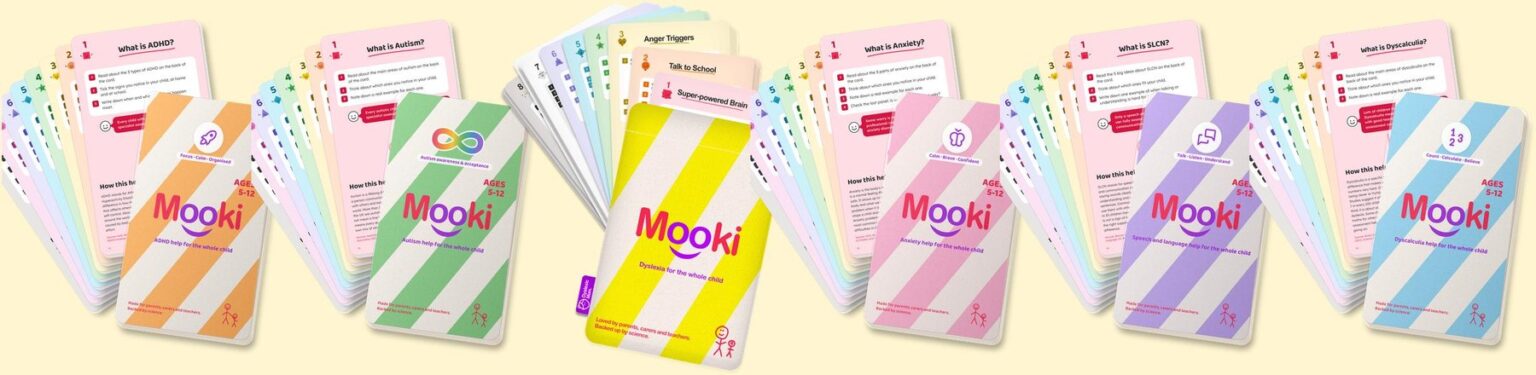
Today’s activities are from Mooki Cards
For any child with big feelings, with or without a diagnosis. There are six decks, so you can pick the one closest to what your child finds hard: ADHD, autism, anxiety, dyslexia, speech and language, or dyscalculia.
Each deck gives you:
- A section on understanding the need, in plain words, so you know what’s going on for your child.
- Calm, 10-minute activities to help, like the two above.
- Everything on your phone, with nothing to print.
You don’t have to do this alone
Talk to other parents who really get it in our free Facebook group, Stressed SEN Mums: Find Your Calm. It’s a kind, friendly space to share the hard days and the small wins.
Want to understand it more? Read the full guide
When you have a quiet moment, here’s how simple, natural habits turn the worry alarm down over time. None of them need special products.
Why everyday habits help
When the alarm goes off too often, children feel tense, jumpy, tired and tearful. Everyday habits turn the alarm down by keeping the body rested, fed and active, and give children tools to calm down when it does go off. YoungMinds’ advice on anxiety suggests helping children keep up with exercise, sleep, healthy eating, drinking water and time with the people they love. In the US, the CDC’s guide to children’s mental health lists similar healthy habits.
Sleep: the foundation of calm
A tired child has fewer resources for coping with worry, and worry makes it harder to sleep. The NHS Every Mind Matters guide to supporting children’s mental health recommends positive routines, including a fixed bedtime and wake-up time. Keep those roughly the same every day, build a calm wind-down (bath, pyjamas, story, lights out), switch off screens well before bed, and keep the bedroom cool, dark and quiet.
Movement: shake out the worry
Physical activity uses up the stress energy that builds when children feel anxious, and lifts mood. The NHS recommends children aged 5 to 18 average at least 60 minutes of activity a day (see the NHS physical activity guidelines for children, or the CDC guidelines in the US). It doesn’t have to be sport: walking or scooting to school, a kitchen disco, the trampoline or a family walk all count.
Breathing: calm your child can carry anywhere
Slow breathing is free, invisible and always available. The NHS guide to anxiety in children suggests three deep breaths, in for a count of three and out for a count of three.
Steady routines
Anxious children like to know what’s coming. The NHS advises keeping daily routines steady, preparing children for changes, and trying not to become overprotective. A simple picture plan for mornings and after school, a heads-up before changes (“Tomorrow, Grandma is picking you up”), regular snack times and a short chat time each day all help. Small, planned changes also teach children they can cope when things are different.
Play and connection
Play is how children process feelings, and it gives them a break from worrying. Try creative play (drawing, Lego, playdough, dens), acting out a worry with toys, board games together, or time outdoors. The NHS five steps to mental wellbeing include connecting with others and being active. They apply to you too: when you look after yourself, you have more calm to share.