This guide explains the 10 signs of autism that parents and teachers most often notice, grouped into the three main areas, so you can understand what you’re seeing and know what to do next.
Autism is a difference in how a person’s brain develops. The NHS explains that it affects how a person sees and experiences the world, and how they communicate with and understand other people. Many autistic people prefer identity-first language, such as “autistic child”, and we use it here.
Remember: one sign on its own doesn’t mean a child is autistic. Professionals look for a pattern of differences that have been there since early childhood and affect everyday life.
What are the 3 main symptoms of autism?
People often search for the “3 main symptoms of autism”. Doctors formally look at two areas: social communication, and repetitive behaviours and interests, with sensory differences counted in the second. For parents, it is often easier to think of three broad areas:
- Social communication and interaction: how a child talks, listens, plays and connects with others.
- Repetitive behaviour, routines and strong interests: a need for sameness and deep, focused interests.
- Sensory differences: being over-sensitive or under-sensitive to sound, light, touch, taste or smell.
The 10 signs below sit within these three areas.
Social communication: signs 1 to 4
1. Differences in talking and understanding
Some autistic children talk late. Others talk early and use long words but find conversation hard. They may repeat words or phrases (echolalia), use an unusual tone of voice, or take language literally.
2. Less shared attention
Joint attention means sharing an interest, such as pointing at a plane and then looking at you to check you’ve seen it. The AAP says delays in joint attention are found in most autistic children. Its guide to early signs of autism explains how pointing develops between 12 and 18 months.
3. Not responding to their name
An autistic child may not turn when called, even though their hearing is fine. This is one of the early signs listed by the NHS.
4. Different ways of playing and making friends
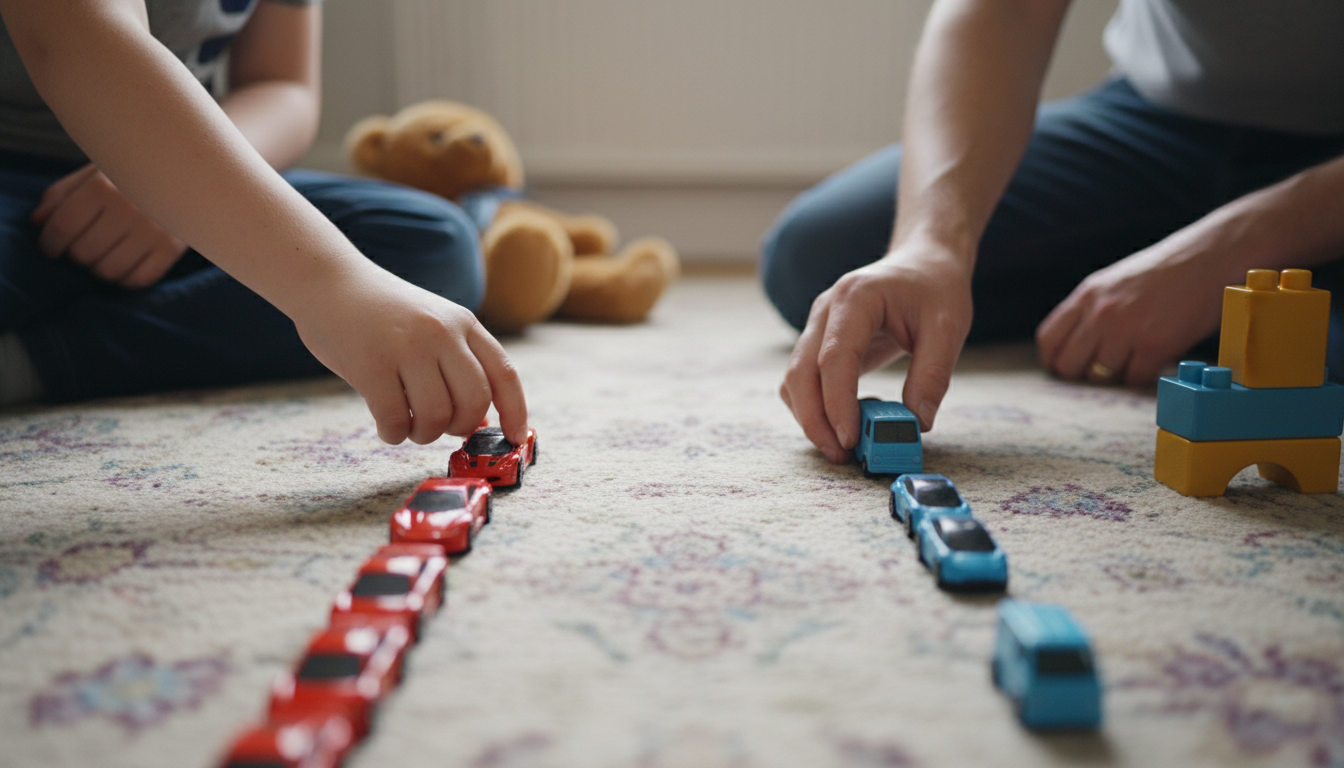
They may prefer to play alone, find it hard to join group games, or not do pretend play. Older children may have few close friends or find unspoken social rules confusing, even though many want friends.
Want to understand how your child sees the world?
Spot the Signs, How I Experience the World and Sensory Detective help you notice patterns and talk about them with your child. Each is one of 56 ten-minute activities in the Mooki Autism deck.
Instant download · use on a phone or tablet, or print and fill in at home or school
Repetitive behaviour and routines: signs 5 to 7
5. Repetitive movements (stimming)
Rocking, hand-flapping, spinning or finger flicking are common. Stimming helps many autistic children feel calm or express joy. The National Autistic Society says that if stimming is harmless, there is no reason to stop it.
6. A strong need for routine
Small changes, like a different route to school, can cause big distress. Your child may have rituals or insist things are done the same way every time.
7. Intense interests
Many autistic children have deep interests, from trains and dinosaurs to a TV series or a type of animal. These interests can be a real strength and a great way in to learning.
Sensory differences: signs 8 to 10
8. Over-sensitivity
Covering ears at loud noises, hating bright or busy rooms, or finding clothes labels unbearable.
9. Under-sensitivity or sensory seeking
Seeming not to notice pain or cold, or seeking out spinning, jumping, squeezing or strong tastes.
10. Eating and body signals
Many autistic children eat a limited range of foods, dislike foods touching on the plate, or find it hard to notice and describe hunger, pain or tiredness.
How signs change with age
Signs look different at 2, at 4 and at 10. A toddler may not point or respond to their name. A child starting school may struggle with group time and changes. Older children may seem to cope at school but be exhausted at home. Girls in particular often mask, which means they hide their differences to fit in.
If your child is under 3, look at early signs such as pointing, babbling and response to their name. If they are older, think about friendships, routines and how they cope with change. A simple checklist, filled in with real examples, is a great thing to bring to an appointment.
Try it today: a 10-minute signs diary
Instead of worrying in your head, put it on paper. Spend ten minutes tonight writing down:
- Talking and connecting: two examples of how your child communicates what they want.
- Routines and interests: one thing that upsets them when it changes, and their favourite topic.
- Senses: sounds, textures or foods they avoid or seek out.
- Strengths: three things they are great at.
Add to it over two weeks, then share it with your GP, health visitor or child’s school (or pediatrician in the US).
What to do next
In the UK, talk to your GP or health visitor, or ask your child’s school or SENCo. They can refer you to a local team for an autism assessment. NICE has guidance on recognising and diagnosing autism in children that NHS teams follow.
In the US, start with your pediatrician. The AAP recommends autism screening at 18 and 24 months, and also whenever a parent raises concerns. The AAP’s guide to understanding autism is a good place to read more.
If you’re worried, talk to your GP or paediatrician, or your child’s school. You don’t need a diagnosis to ask for support.
The bottom line
The 10 signs of autism fall into three areas: social communication, routines and interests, and the senses. No single sign tells the whole story, so notice the pattern, write down real examples and ask for help early. Whatever the outcome, understanding how your child sees the world is the best first step.