
This guide helps parents and teachers spot anxiety symptoms in kids aged 5 to 12, including the signs that are easy to miss, and explains when it is time to get help.
Anxiety does not always look like worry. A child might say their tummy hurts every Monday, cry at bedtime, or get angry when plans change. Knowing the signs of anxiety in kids helps you respond with understanding, rather than seeing the behaviour as naughtiness or fuss.
Free 10-minute course
Help a child with everyday worries
Name worries and shrink them down, in 3 short activities. 10 minutes a day, with free printable worksheets.
What do anxiety symptoms in kids look like?
Anxiety affects the whole child: their feelings, their behaviour and their body. Children often cannot explain what is happening, so adults need to look for clues. The CDC notes that some anxious children keep their worries to themselves, which means signs can be missed.
It helps to think about three groups of signs.
Emotional signs
- Worrying a lot, often about “what if” things
- Needing lots of reassurance (“Are you sure? Promise?”)
- Tearfulness or getting upset easily
- Irritability or anger, which can be the main sign in some children
- Low confidence or saying “I can’t do it” before trying
- Fear of making mistakes
Behavioural signs
- Avoiding things: school, parties, clubs, the dentist or new places
- Clinginess or following a parent around the house
- Trouble sleeping, needing a parent to stay, or waking in the night
- Meltdowns at transitions, such as leaving the house
- Being very quiet at school but upset at home
- Checking, asking the same questions, or needing things done a certain way
Physical signs
- Tummy aches or feeling sick, especially before school
- Headaches
- Fast heartbeat or breathing
- Tiredness
- Changes in eating
- Needing the toilet often
Physical signs are real, not made up. Anxiety genuinely causes tummy aches and headaches. It is still worth seeing a doctor to check for other causes.
Signs of anxiety by age
Anxiety can look different as children grow. The NHS guide to anxiety in children describes some differences between younger and older children. The table below builds on that with what parents and teachers often see.
| Age | Signs you might notice |
|---|---|
| 5 to 7 | Clinginess, tears at drop-off, tantrums, bedwetting, bad dreams, waking at night, tummy aches |
| 8 to 10 | Lots of “what if” questions, worry about tests or getting things wrong, avoiding clubs or parties, trouble getting to sleep |
| 11 to 12 | Low confidence, angry outbursts, trouble concentrating, avoiding school or friends, worry about how others see them |
Every child is different, so use this as a rough guide. The question is not “Does my child ever do this?” but “Is this happening a lot, and is it getting in the way?”
Try it today: a 10-minute “worry clues” diary
If you suspect anxiety, a short diary helps you see patterns. Spend 10 minutes each evening for one or two weeks.
- Draw three columns: When, What happened, What helped.
- Note any sign you saw: tummy ache, tears, anger, avoiding something.
- Add what came before: a school day, a change of plan, bedtime.
- Write what helped, even a little: a hug, slow breaths, a plan.
- At the end of the week, look for patterns. Mondays? Swimming? Busy places?
This diary is also very useful to bring to a GP, paediatrician or teacher meeting.
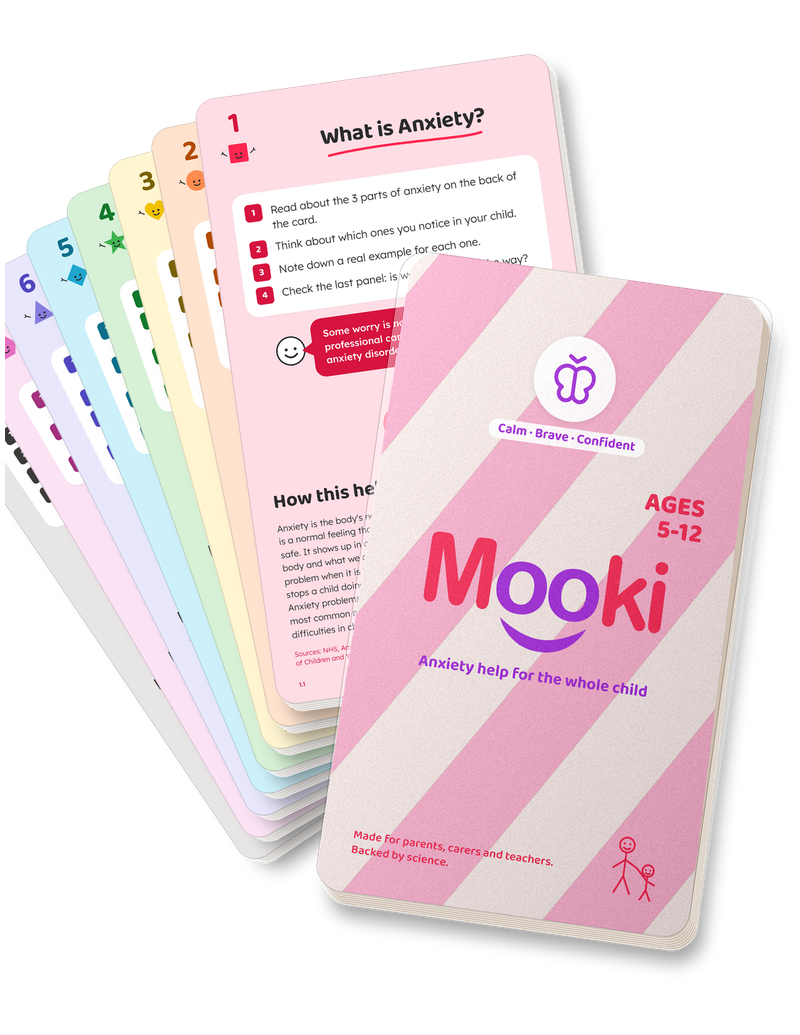
Help your child name what is going on inside
Spot the Signs, Body Signals and Feelings Check-in from the Mooki Anxiety deck help you and your child notice worry early. Each is one of 56 ten-minute activities with a child worksheet on the back.
Instant download · use on a phone or tablet, or print and fill in at home or school
Helping your child name what’s going on
Many children have no words for anxiety. You can help them learn.
- Name it calmly: “I wonder if your tummy hurts because you’re worried about swimming.”
- Link body and feelings: “When we feel nervous, our tummy can feel tight. That’s your body’s alarm.”
- Use a scale: ask your child to rate their worry from 0 to 10.
- Ask open questions: “How are you feeling about tomorrow?” works better than “Are you scared about tomorrow?”
YoungMinds suggests talking about feelings, noticing body signs and building calming habits as everyday ways to help.
Signs for teachers to watch for at school
Anxious children are often quiet and well behaved at school, so their struggles can be missed. Look out for children who:
- Ask to see the school nurse or go home with tummy aches
- Freeze or go blank in tests or when asked a question
- Avoid reading aloud, group work or assembly
- Arrive late or miss certain days often
- Need a lot of reassurance about instructions
- Struggle with changes, such as a supply teacher (substitute teacher in the US)
Share what you notice with parents and, in the UK, the SENCo. In the US, the school counselor or school psychologist can help.
Kinds of anxiety behind the signs
Different kinds of anxiety can cause different patterns. The Child Mind Institute describes separation anxiety, social anxiety, generalised anxiety, specific phobias, panic and selective mutism. You don’t need to work out which one it is. A professional can do that.
When to get help
Talk to a professional if signs are strong, last more than a few weeks, or stop your child doing everyday things like going to school, sleeping or seeing friends.
- UK: see your GP, who can check for other causes and refer to CAMHS if needed. Speak to the school SENCo about support.
- US: see your pediatrician. The CDC notes that the US Preventive Services Task Force recommends anxiety screening for children aged 8 to 18. The school psychologist can talk with you about support, which might include a 504 plan.
The American Academy of Child and Adolescent Psychiatry also points out that quiet, compliant anxious children can be overlooked, so trust your instincts.
The bottom line
Anxiety symptoms in kids can look like tummy aches, tears, anger or avoidance, not just worry. Noticing patterns and naming feelings are powerful first steps. If you’re worried, talk to your GP or paediatrician, or your child’s school. Early support really helps.