Worried your child might have dyslexia, autism or ADHD? These three short checklists help you see the pattern in plain words, in about 5 minutes, and tell you what to do next.
Every child has hard days. What matters is a pattern: most days, for several months, at home and at school. Tick the ones that sound like your child. It isn’t a test, and only a professional can diagnose. But it gives you something clear to take to the school or your GP (pediatrician in the US).
Jump to: Dyslexia · Autism · ADHD · What to do next
Does my child have dyslexia? 8 signs
Does your child, compared with others their age:
- find it hard to link letters to their sounds
- read slowly, or guess words from the first letter or the pictures
- spell the same word in different ways on one page
- still mix up letters like b and d, long after classmates have stopped
- avoid reading aloud, or say reading is “boring”
- find it hard to remember sequences, like the days of the week or times tables
- sound bright when talking, but their writing doesn’t match
- have a parent, brother or sister who found reading hard
Want more detail? Read our full dyslexia checklist for parents, or the NHS guide to dyslexia. In the US, the International Dyslexia Association has fact sheets for parents.
Does my child have autism? 8 signs
Does your child:
- find friendships confusing, or prefer to play alone or on their own terms
- take words literally, and miss jokes or sarcasm
- get very upset when plans or routines change
- have one or two intense interests they talk about a lot
- find noise, labels in clothes, food textures or bright lights hard to bear
- repeat movements or phrases, like flapping, rocking or lining things up
- find eye contact or back-and-forth chatting hard
- hold it together at school, then melt down at home
Autism can look different in girls, who often copy others to fit in. Read our guide to signs of autism in children, the NHS guide to autism or the CDC’s guide to autism in the US.
Does my child have ADHD? 8 signs
Does your child:
- fidget, wriggle or find it hard to sit still, even when they want to
- get distracted easily and drift off part-way through a task
- lose things like shoes, coats or homework most days
- interrupt, or blurt out answers before the question is finished
- start lots of things but rarely finish them
- forget instructions that have more than one step
- act before thinking, or take risks
- have big feelings that flare up fast and calm down fast
Some children with ADHD are quiet daydreamers, not busy at all. Read ADD and ADHD symptoms in children, the NHS guide to ADHD in children or the CDC’s guide to ADHD.
I ticked a lot of boxes. Does that mean my child has it?
Not necessarily. Tiredness, worry, hearing or eyesight problems, and big changes at home can all look like these signs. Children can also have more than one, such as ADHD and autism together. If several signs fit, most days, for 6 months or more, in more than one place, it’s worth asking for help.
What to do next: UK and US
- Write it down (1 week). Note what happens, when and where. Bring your ticked list.
- Talk to school. In the UK, ask for the SENCo (the school’s special educational needs coordinator). In the US, ask the school for an evaluation in writing.
- See your doctor. In the UK, your GP can refer for an autism or ADHD assessment. In the US, start with your pediatrician.
- Get support while you wait. You don’t need a diagnosis to start helping your child at home. See our guide to getting help from school.
Help while you wait, with or without a diagnosis
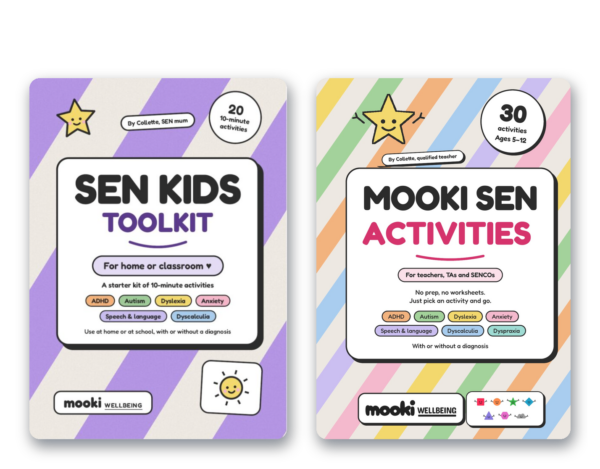
The SEN Mums Journal gets you through the hard moments. The SEN Kids Toolkit gives you 20 ten-minute activities to do together, for ADHD, autism, dyslexia and more. Both books for £24.
The bottom line
A checklist can’t diagnose, but it can help you put a worry into words. If the pattern fits, talk to school and your doctor, and keep going. You know your child best.