
For parents and carers
Help for you and your SEN child, one step at a time
Wherever you are right now, start there. Calm, practical help from a SEN mum and teacher who’s been there.
Step 1 · Is it SEN?
Does my child have SEN?
Wondering if it’s “just a phase”? Check the signs of each need, with simple checklists and when to ask for help. You don’t need a diagnosis to start helping your child.
Step 2 · Understanding SEN
Understanding your child’s needs
Once you know more about how your child’s brain works, their behaviour starts to make sense, and it gets easier to know what helps.
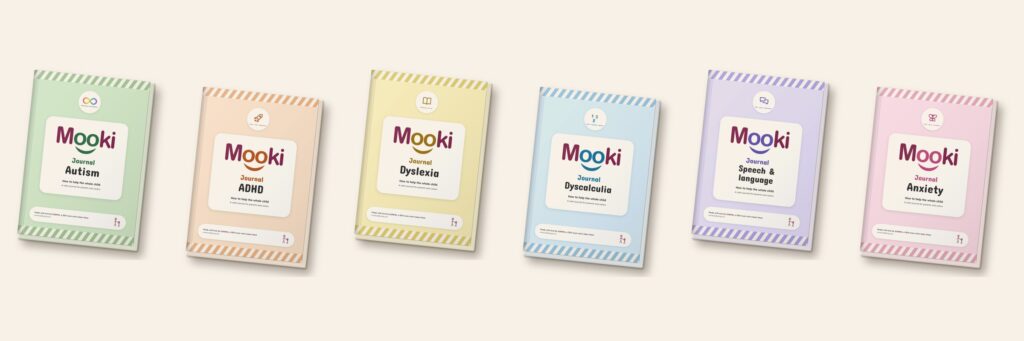
Mooki Journals: everything in one calm place
A journal for each need, showing you how to help the whole child: a clear checklist, how to get help from school, practical activities, help with emotions, and self-care for you. PDF or printed copy, £35. Coming soon.
Step 3 · Practical ways to help
Practical ways to help, starting today
Every guide starts with what to do right now. Pick the one that sounds like today.
All hard-day help → · Help by age → · Free 10-minute courses →
Step 4 · Feeling overwhelmed
When you’re running on empty
Looking after an SEN child is a lot. Looking after yourself isn’t selfish: it’s part of looking after them.
If you feel low, anxious or overwhelmed most days, please talk to your GP. Asking for help is a strength, not a failure.