Is your autistic child melting down, withdrawing or ripping up the emotion charts after school? It could be autistic burnout. Here’s what burnout looks like in children, why it happens, how to help them recover at home, a 10-minute “recharge list” to make today, and how to talk to school.
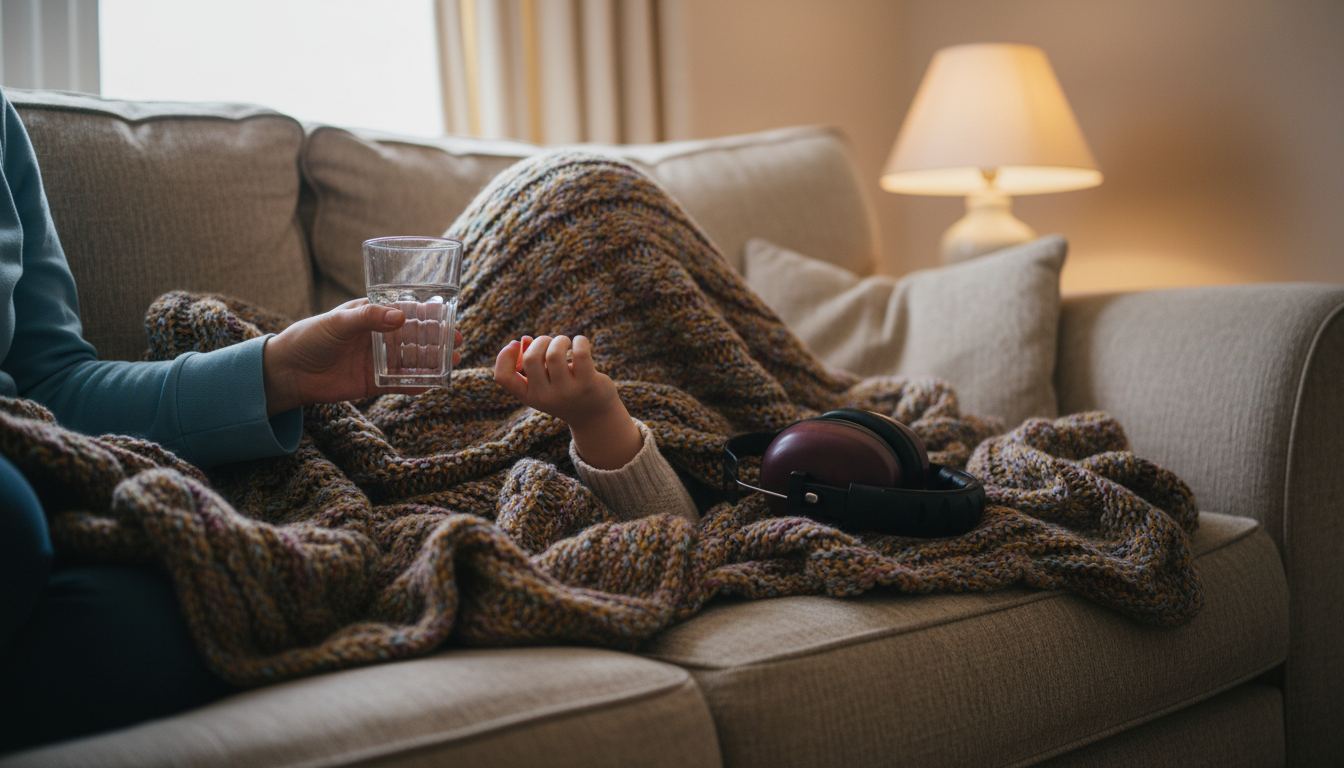
You’re not alone. Many parents describe a child who seems “fine” at school but falls apart the moment they get home. They might scream, hide under a blanket, stop talking or refuse to do anything at all. The tools that used to help, like emotion charts, suddenly make things worse.
This is often a sign that your child has run out of energy. The My Energy Battery and Quiet Space cards in the Mooki Autism deck can help them recover.
What is autistic burnout?
Autistic burnout is a state of deep exhaustion. The National Autistic Society explains that burnout can happen when pressures become too much, leading to extreme exhaustion. Sensory overload, social demands and even ordinary days can use up a lot of energy.
For many autistic children, school is the biggest drain. They spend all day coping with noise, crowds, changes and social rules. Many also mask, which means hiding their autistic traits to fit in. Masking takes a huge amount of energy.
Signs of autistic burnout in children
Burnout can look different in every child. Common signs at home include:
- more meltdowns or shutdowns – over things that didn’t bother them before
- withdrawal – hiding, staying in their room, or not wanting to talk
- losing skills – finding it harder to talk, dress, wash or eat than usual
- extreme tiredness – even after a good night’s sleep
- more sensory sensitivity – noise, light or clothes become unbearable
- refusing usual tools – tearing up emotion charts or rejecting calm-down strategies
- not wanting to go to school – or struggling more and more each morning
Many children seem to cope at school and then release everything at home. This is sometimes called “after-school restraint collapse”. It’s not that home is the problem. Home is where they feel safe enough to let go.
How to help an autistic child recover from burnout
Recovery takes time, often weeks or months. The National Autistic Society suggests time on interests that re-energise you, time away from school or work, and being able to unmask. At home, try:
- Cut the demands – drop anything that isn’t essential for now, like clubs, chores or homework battles
- Protect quiet time – especially straight after school, with no questions
- Let them unmask – stim, rock, flap, talk about their interest or be silent, without being corrected
- Lean into special interests – these often recharge autistic children better than anything else
- Reduce sensory load – dim lights, quiet rooms, soft clothes and favourite foods
- Keep routines predictable – fewer surprises means less energy spent on change
- Use fewer words – a calm presence often helps more than talking about feelings
If emotion charts are being ripped up, put them away for now. Your child may simply have no energy left to name feelings. You can bring them back later.
Try it today: a 10-minute recharge list
Do this on a calm day, or make it yourself if your child is too tired.
- Notice the drains (3 minutes). Write down what seems to drain your child most: school, noisy places, busy weekends, long car journeys, being asked lots of questions.
- Notice the chargers (3 minutes). Write what seems to recharge them: a special interest, a dark tent, a bath, a favourite show, time alone, a pet.
- Pick 3 chargers for after school (2 minutes). Choose three things your child can do every day after school, with no demands attached.
- Make it visual (1 minute). Draw or print a picture for each charger and stick them where your child can see them.
- Offer, don’t push (1 minute). After school, point to the pictures and say, “These are here for you.” Let your child choose, or choose nothing.
Want ready-made tools to help your child recharge?
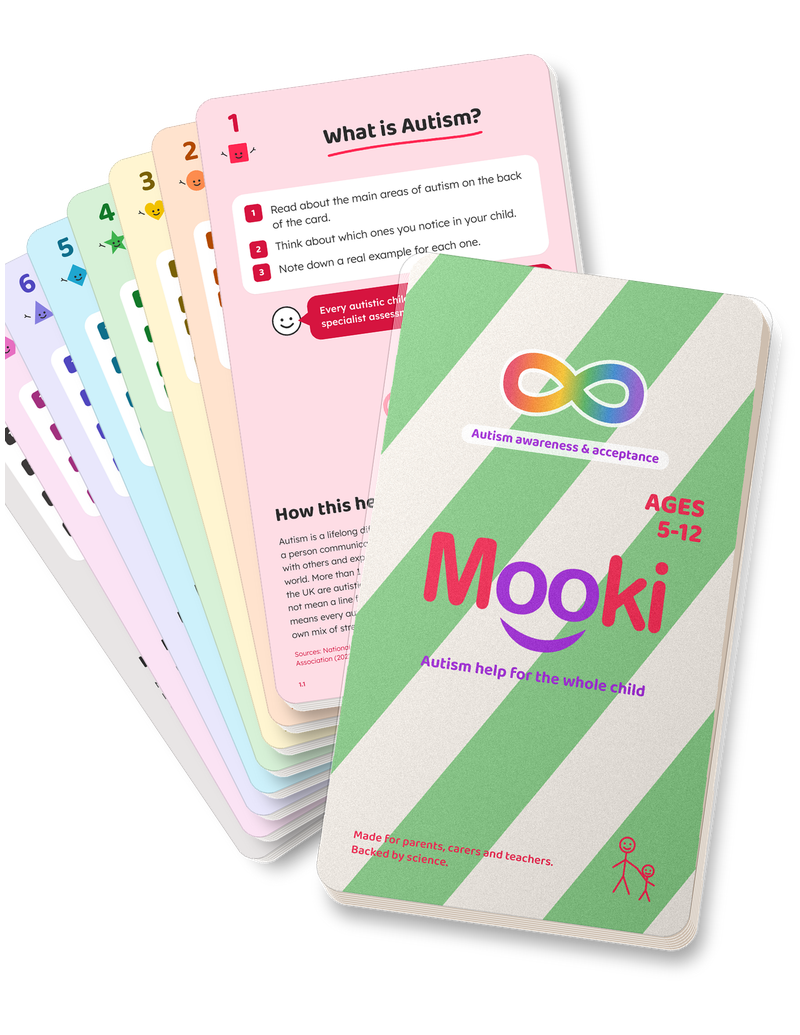
The My Energy Battery, Quiet Space and Special Interests cards give you calm, simple ways to spot when energy is running low and help your child recover. Each is one of 56 ten-minute activities in the Mooki Autism deck. The Look After You card is there for you, too.
Instant download · use on a phone or tablet, or print and fill in
How to talk to school about autistic burnout
School may not see what you see at home. That doesn’t mean your child is fine. Ask for a meeting with the SENCo (special educational needs coordinator) and share what’s happening after school. You could ask for:
- regular quiet breaks during the day
- a safe space your child can go to without asking
- less homework, or none, for a while
- a reduced timetable for a short time, with a clear plan to build back up
- one trusted adult who checks in each day
Teachers may find our guide to creating a calming SEND classroom helpful. If burnout is leading to school refusal, see our guide to school refusal and PDA.
Could it be something more?
Burnout can overlap with anxiety and depression. Talk to your GP or doctor if your child:
- seems very low, hopeless or tearful for weeks
- has stopped eating or sleeping properly
- has lost skills and isn’t getting them back
- talks about not wanting to be here (get help straight away)
Autistic girls in particular often mask at school, so their struggles can be missed. Our guide to autism in girls explains more.
When to get help: UK and US
In the UK: talk to your GP, who can refer to CAMHS (children and young people’s mental health services). Talk to school about extra support or an EHC needs assessment. The National Autistic Society and Contact have helplines for parents.
In the US: talk to your pediatrician and the school team. Support for energy, breaks and reduced demands can go into a 504 plan or IEP.
The bottom line
Autistic burnout is real exhaustion, not bad behaviour. Cut the demands, protect quiet time, let your child unmask and lean into what recharges them. Recovery takes time, but it does happen. You know your child best. For ready-made tools, the Mooki Autism deck has 56 ten-minute cards, including My Energy Battery and Quiet Space.