This guide is for UK parents whose child is struggling with maths. It explains how SEN support works, what the graduated approach means, when to ask about a dyscalculia EHCP, and the questions to ask your child’s SENCo.
The SEND system can feel like a maze. The good news is that you don’t need to know everything at once. Most support starts with a simple conversation with your child’s school. (This guide covers England; Wales, Scotland and Northern Ireland have their own systems.)
Does dyscalculia count as SEND?
It can. A child has special educational needs if they need extra or different help to learn compared with most children their age. Dyscalculia is a specific learning difficulty with numbers, as the British Dyslexia Association explains, and many children with it need extra help in maths.
Importantly, your child does not need a formal diagnosis to get SEN support. Schools should respond to what a child needs.

How SEN support for dyscalculia works
The gov.uk guide to children with special educational needs explains that SEN support is extra help given in school. The SENCo (special educational needs co-ordinator) organises it, working with the class teacher and you.
Schools follow the SEND Code of Practice, which describes a “graduated approach”. This is a cycle with four steps:
- Assess: the school looks closely at your child’s maths, using their own checks and your views.
- Plan: together you agree what support will happen, what it should achieve and when it will be reviewed.
- Do: the support is put in place, such as small-group maths, hands-on resources or extra time.
- Review: everyone checks how well it worked, then the cycle starts again.
Many schools write this down in a SEN support plan, sometimes called a “pupil passport” or “provision map”. Ask to see a copy.
What SEN support for maths might include
- Short, regular small-group or one-to-one maths sessions focused on number sense.
- Hands-on resources such as counters, bead strings and base-ten blocks.
- A number line, 100 square or table square on the desk.
- Printed questions to cut down copying from the board.
- Extra time, and fewer questions per page.
- Help with maths worry, such as a calm start to lessons.
Your council’s “Local Offer” website also lists the SEND support available in your area. Search for your council’s name and “Local Offer” to find it.
Try it today: prepare for a SENCo meeting
Ten minutes of preparation can make your meeting far more useful. Jot down:
- Three things your child finds hard in maths, with real examples.
- How maths affects them at home, such as homework stress, money or telling the time.
- What helps, such as counters, a number line or extra time.
- What your child says about maths, in their own words.
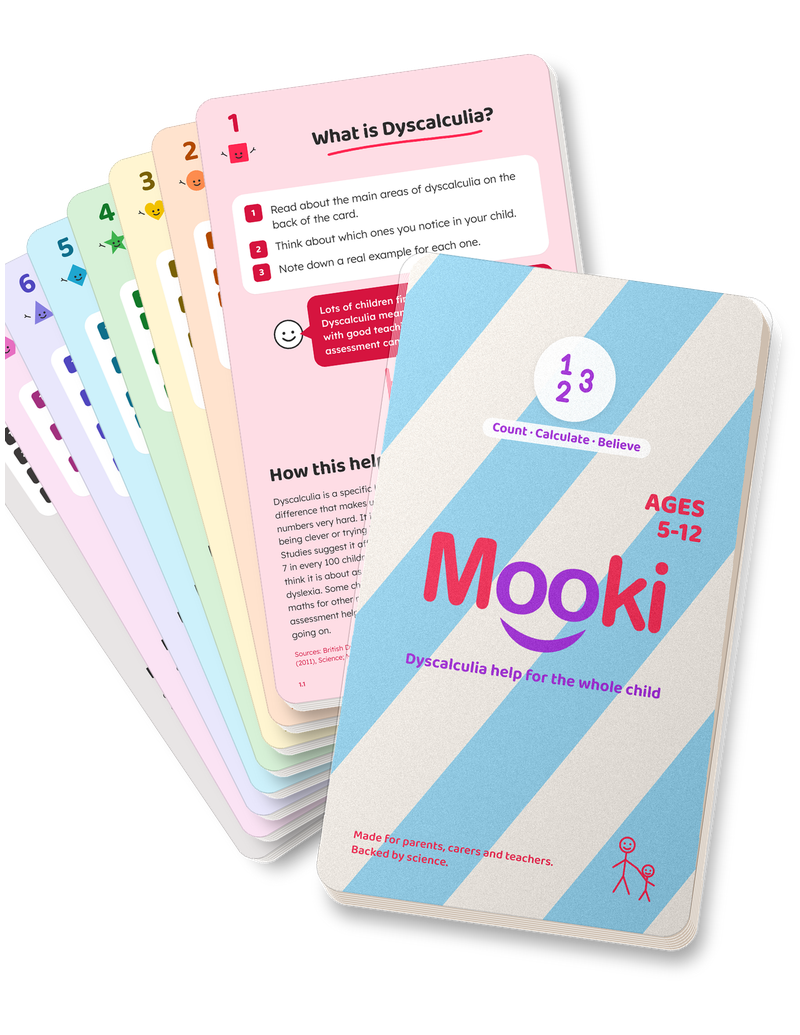
Ready to talk to the SENCo with confidence?
Talk to School helps you plan what to say, and Support Plan keeps track of what works for your child. Each is one of 56 ten-minute activities in the Dyscalculia deck.
Instant download · use on a phone or tablet, or print and fill in at home or school
SENCo maths support: questions to ask
- “Is my child on the SEN register for maths?”
- “What exactly will the support be, who will give it and how often?”
- “What targets have you set, and how will we know they are working?”
- “Can my child use concrete resources, a number line or a table square in class?”
- “Would a specialist assessment for dyscalculia be helpful?”
- “Could we involve an educational psychologist or specialist teacher?”
- “When will we next review the plan together?”
Ask for any agreed actions in writing. A short follow-up email after the meeting is a simple way to do this.
When to think about a dyscalculia EHCP
An EHC plan (education, health and care plan) is a legal document for children with more complex needs. Many children with dyscalculia do well with SEN support alone. But if your child is making little progress despite good support, or has several needs that together have a big impact, an EHCP may be worth exploring.
The first step is an EHC needs assessment by your local council. Under section 36 of the Children and Families Act 2014, the council must carry one out if it thinks the child has or may have SEN, and may need provision through an EHC plan.
How the EHCP process works
The gov.uk page on extra SEN help sets out the main steps:
- Who can ask: you can ask the council directly. Teachers, doctors and others can also make a request.
- Evidence: the council may ask for school reports, assessments and a letter from you about your child’s needs.
- Timings: the council should tell you within 16 weeks whether it will make a plan, and has 20 weeks from your request to issue the final plan.
- Draft plan: you get at least 15 days to comment on the draft.
- If you disagree: you can challenge decisions, and appeal to the SEND Tribunal if needed.
Where to get free help
You don’t have to do this alone. Every council area has an Information, Advice and Support Service (often called SENDIASS), which gives free, impartial advice. Search for your council’s name and “SENDIASS” to find yours. They can help with letters, meetings and EHCP requests. IPSEA, a national charity, offers free, independent legal advice about SEN support and EHCPs. If you’re worried about your child’s wider health or development, your GP can help too.
The bottom line
For most children with dyscalculia, help starts with SEN support and a good working relationship with the SENCo. If progress stays slow despite that support, you have the right to ask your council for an EHC needs assessment. Keep notes, ask questions and lean on free advice services: you are your child’s best advocate.