Noticing 10 year old anxiety? Or does your 9, 11 or 12 year old seem weighed down by worries? These years bring lots of change. Friendships get trickier, schoolwork gets harder, bodies start to change, and the move to secondary school (middle school in the US) gets closer.
It’s no surprise worries grow at this age. Here’s what to look for and how to help.
What do 9 to 12 year olds worry about?
- Friends: falling out, being left out, group chats.
- Tests: like SATs in Year 6.
- Moving up: getting lost, new teachers, older kids.
- Their bodies: puberty, looks and fitting in.
- The world: the news, money worries, illness.
- Online life: comparing themselves, or seeing upsetting things.
These worries are part of growing up. They’re a concern when they’re there all the time or get in the way of everyday life.
Signs of anxiety in 10 year olds
At this age, worry shows up less in tears and more in mood and behaviour:
- not wanting to try new things
- trouble focusing, sleeping or eating
- angry outbursts
- tummy aches or headaches on school days
- lots of “what if?” questions
- meltdowns over small mistakes
- more time alone in their room
- avoiding clubs, parties or friends
Some tweens hide worry well at school and let it out at home. That means they feel safe with you. You’re not doing anything wrong.
How to talk to a tween about worries
- Talk side by side, like in the car, on a walk or while cooking.
- Say what you’ve noticed: “You’ve seemed quiet after school this week.”
- Listen more than you fix.
- Name the feeling: “That sounds really stressful.”
- Respect their privacy, but always act if they’re unsafe.
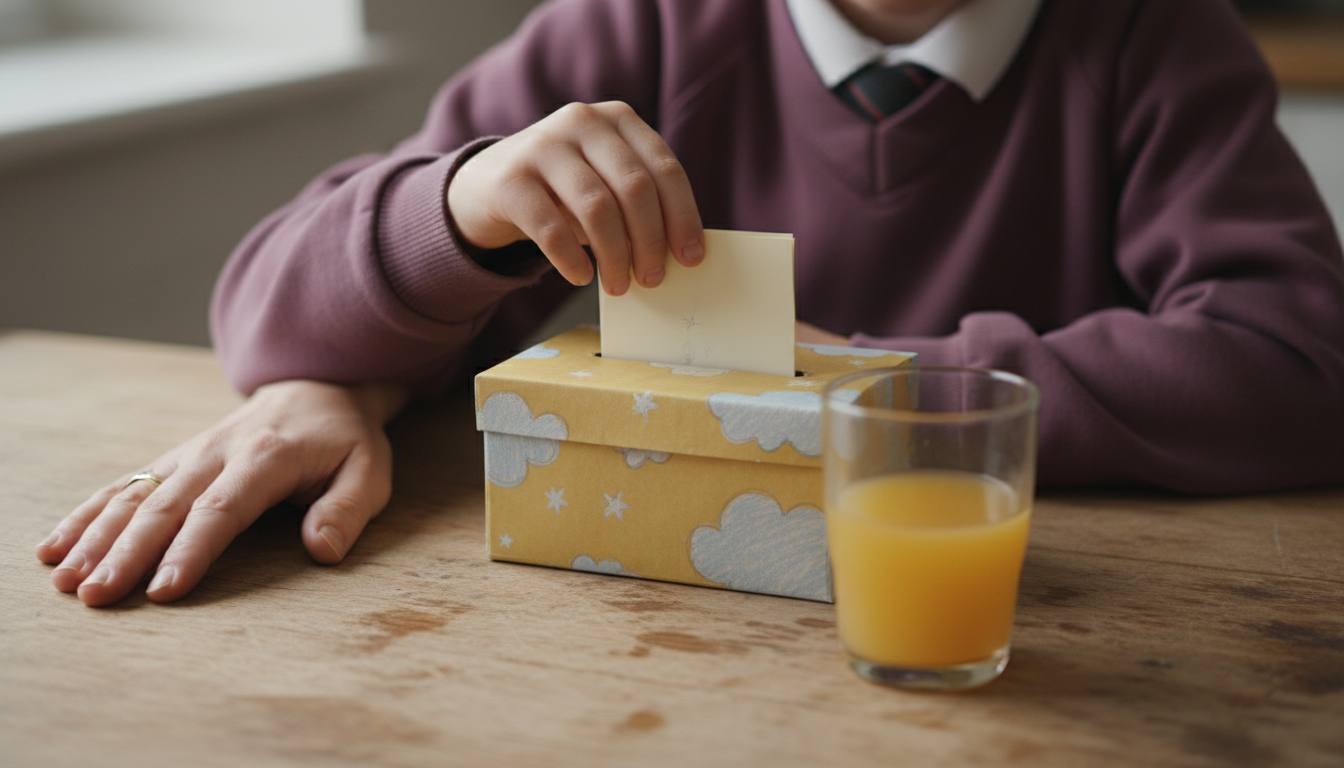
- Leave the door open. They could write you a note or send a message instead.
Try this today: a 10-minute worry chat
- Pick a relaxed moment, like a walk or a snack after school.
- Ask them to score friends, school and home from 1 to 10.
- Look at the lowest score: “What would make that a bit higher?”
- Agree one small step, like practising the walk to the new school.
Help for you and your child, in one parcel
The SEN Mums Journal gets you through the hard moments. The SEN Kids Toolkit gives you 20 ten-minute activities to do together. Both books for £24, save 20%.
Help with friends, tests and moving up
- Friends: ups and downs are normal. One falling-out isn’t the end. Clubs help them find other friends. If you think it’s bullying, talk to school.
- Tests: praise effort, not marks. Short bits of revision with breaks, and protect sleep.
- Moving up: start early with small steps: visit the school, practise the route, look at the timetable. Keep home routines the same.
If the move is hard, read school avoidance after the move to secondary. YoungMinds also has tips on change.
Could it be something more?
It may be worth a closer look if your child’s worry is there most days, is getting worse, or stops them doing everyday things. A strong fear of being judged or embarrassed may be social anxiety. See anxiety symptoms in kids or try our anxiety checklist.
Getting help
In the UK: talk to the class teacher, head of year or SENCo, and your GP. The NHS has more on anxiety in children.
In the US: talk to your pediatrician or the school counselor.
The bottom line
10 year old anxiety often centres on friends, tests and moving to a new school. Talk side by side, listen before fixing, and break big changes into small steps. You know your child best.