Help a dyslexic child understand what dyslexia is, separate fact from fiction, and see the great things they could achieve. 3 short activities, 10 minutes each, over 1 week.
At a glance
- Time: 3 activities, 10 minutes each, over 1 week
- You need: pens or crayons, a quiet spot, and the 3 free worksheets below
- Mooki cards: Common Questions, Myth Buster, Superpower People (optional)
- By the end: the child will know the facts about dyslexia, and see the great things they could achieve
Why talk about dyslexia?
The child may be confused by dyslexia. They may think it is a bad thing, or hear untrue things about it at school. Talking about it can help them understand how it affects them, and ease their worries.
Learn the facts first, so you can explain dyslexia easily:
- 10% of people have dyslexia.
- It is a brain processing issue.
- It affects writing and memory.
- There is no cure for dyslexia.
- Dyslexia is caused by genetics.
- It does not affect intelligence.
Watch this short video together to see how dyslexia affects a person:
Before you start
- Print the worksheets. Or the child can draw their own on plain paper.
- One a day. Do each activity on a different day so the child doesn’t feel overwhelmed.
- Quiet and calm. Find a quiet place with no distractions.
- Focus on strengths. Talk about the good things about being dyslexic, and what the child can achieve.
Day 1: What is dyslexia?
Helps the child understand dyslexia by answering their questions. Uses the Common Questions card.

- I think dyslexia is… Ask: “What do you think dyslexia is?” Let them draw or write their answer first.
- Facts we shared. Share one or two of the facts above. Tick each one you talk about.
- My questions. Ask: “Do you have any other questions?” Write them down and answer them together.
Tip: there’s no wrong answer in the first box. It shows you where to start.

Day 2: True or false?
Helps the child separate dyslexia fact from fiction. Uses the Myth Buster card.
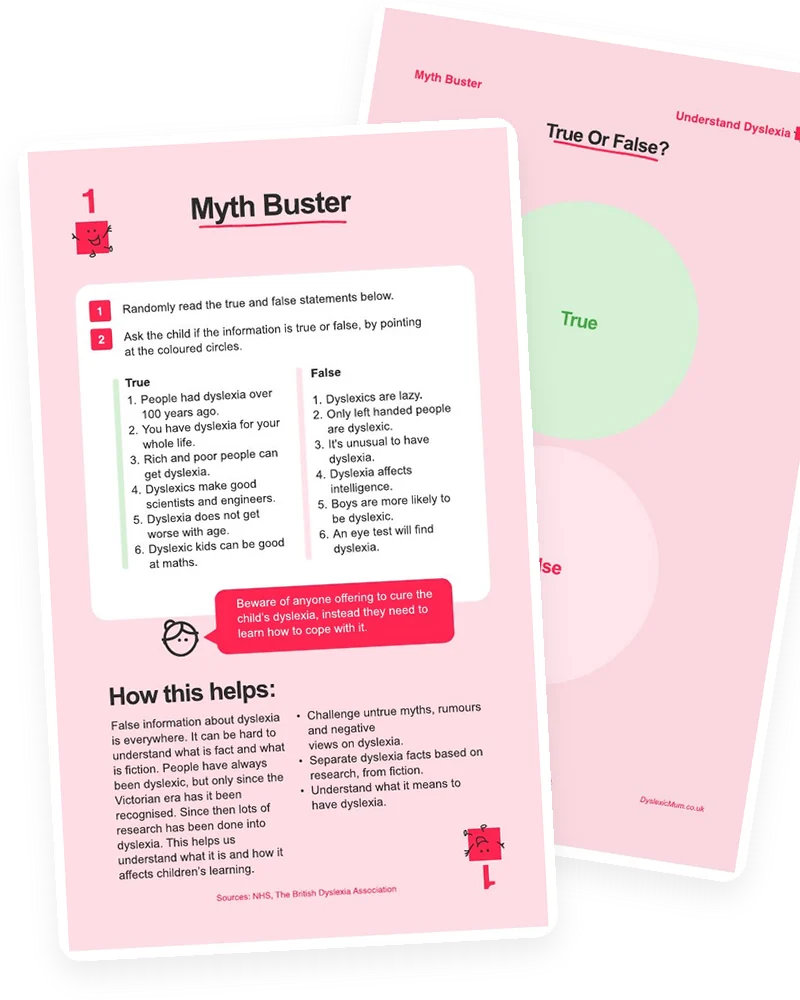
- Say a statement about dyslexia and write it on line 1. For example: “Dyslexia means you are not clever.”
- Ask: “True or false?” Let the child tick a box first.
- The truth: tell them the real answer and write it in. For example: it’s false. Dyslexia does not affect intelligence.
Tip: try up to 4 statements. Mix in some true ones too.

Day 3: What could I achieve?
Inspires the child with great things dyslexic people have achieved. Uses the Superpower People card.
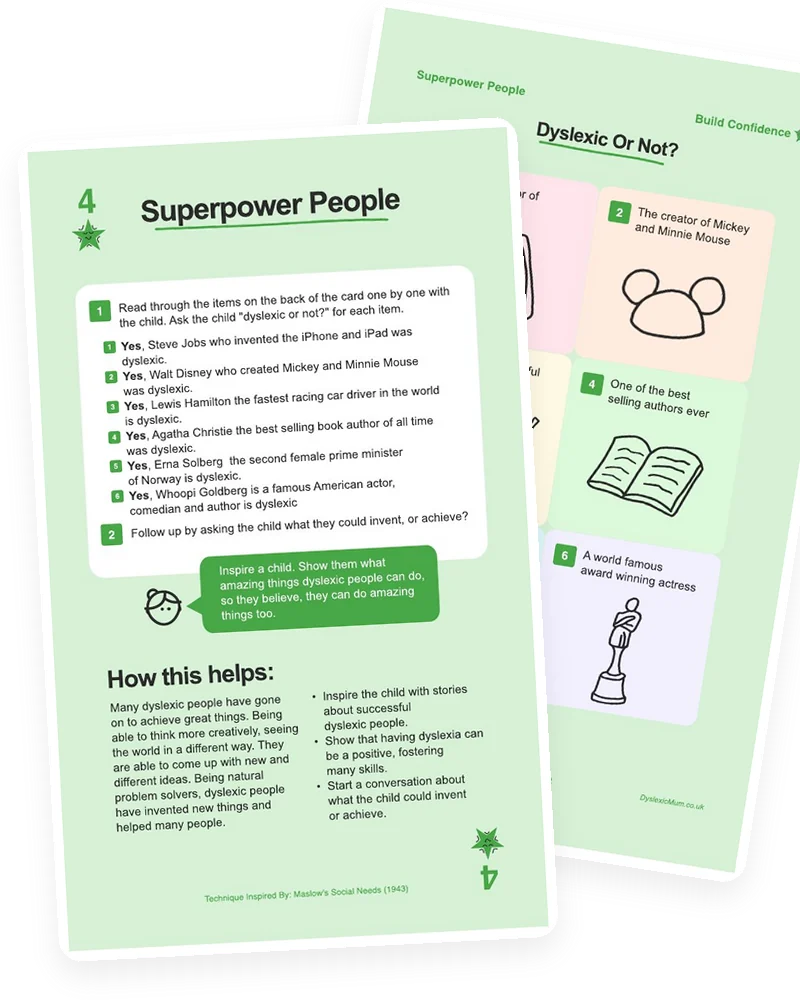
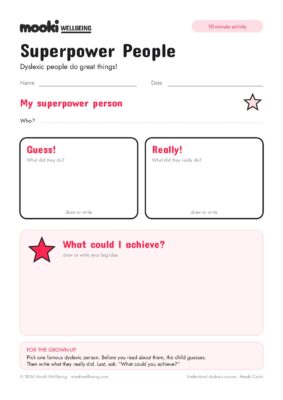
- Who? Read our list of famous people with dyslexia together. Pick one person and write their name.
- Guess! Really! Before you read about them, ask the child to guess what they did. Then read and write what they really did.
- What could I achieve? Ask: “What could you achieve?” Let them draw or write their big idea.
Tip: pin the finished sheet up where the child can see it.
How it went
One SEN parent on talking about it together:
“When we did the understanding dyslexia activities, we had a really good conversation.
We talked about the positives of thinking differently, and about how school was feeling. Activities about feelings, like the Emoji Check-in, also helped us realise the stress was really worry about going back to school in September.”
After the week: ask yourself
- Did the child have more questions about dyslexia?
- How does the child feel about dyslexia? Do they think it is a strength?
- Does the child believe they can achieve things?
Get all 3 activities, plus 53 more
The Common Questions, Myth Buster and Superpower People cards give you ready-made steps on the front and a picture activity for your child on the back. Everything is in one place. Each is one of 56 ten-minute activities in the Mooki Cards deck.
Instant download · use on a phone or tablet, or print and fill in