Worried about 3 year old anxiety, or wondering whether your 2 or 4 year old’s fears are normal? This guide explains which fears are typical at ages 2 to 4, which signs suggest something more, and gentle routines that help at home and at nursery or preschool.
Toddlers and preschoolers feel big feelings, but they don’t yet have the words to explain them. A worried 3 year old is more likely to cling, cry or have a meltdown than to say, “I feel anxious.” That can make anxiety hard to spot.
Typical fears at ages 2 to 4
Fear is a normal, healthy part of early childhood. As young children start to understand more of the world, they also notice more things that seem scary.
Common fears at this age include:
- being apart from a parent or main carer;
- strangers or new places;
- loud noises, such as hand dryers, fireworks or the hoover (vacuum);
- the dark, monsters or bad dreams;
- dogs or other animals;
- baths, haircuts or the doctor.
The NHS says separation anxiety is common between about 6 months and 3 years, and that it’s a normal stage most children grow out of. It can also show up at other stressful or anxious times, such as when a new sibling arrives or the family moves house.
Tantrums are normal too. The NHS says temper tantrums usually start at around 18 months and are much less common by the age of 4, as children learn to talk more. HealthyChildren.org, from the American Academy of Pediatrics, says tantrums happen most between ages 1 and 3 and tend to get better after 3. A tantrum on its own is not a sign of anxiety.

2, 3 and 4 year old anxiety symptoms to look out for
The difference between a typical fear and anxiety is usually about how much and how long. A typical fear comes and goes and your child can be comforted. Anxiety is stronger, lasts longer and starts to get in the way of everyday life.
The NHS lists signs of anxiety in young children in its guide to anxiety in children, including:
- irritability and tearfulness;
- clinginess;
- problems getting to sleep;
- waking in the night or having bad dreams;
- wetting the bed.
Other things you might notice:
- tummy aches or saying they feel sick before going out;
- lots of meltdowns linked to particular places or events;
- refusing to try anything new, again and again;
- going back to earlier habits, such as wanting a bottle or being carried;
- a fear that seems far bigger than other children’s and doesn’t fade.
Every child is different. Many of these things also happen when a toddler is tired, hungry, poorly or simply going through a phase. What matters is the overall pattern over several weeks.
Try it today: a 10-minute “brave goodbye” practice
This playful routine helps children who find separations hard.
- Play peek-a-boo or hide and seek (3 minutes). It shows that you always come back. The NHS suggests peek-a-boo for this very reason.
- Act it out with toys (3 minutes). Teddy goes to nursery. Mummy or Daddy Teddy waves goodbye and comes back at “home time”.
- Practise your goodbye (2 minutes). Choose a short, special goodbye, such as a hug, a high five and “See you after lunch!”
- Do a mini separation (2 minutes). Step into the next room, keep talking so your child can hear you, then come back cheerfully.
Repeat often. Over time, build up to short times with a familiar adult, as the NHS suggests.
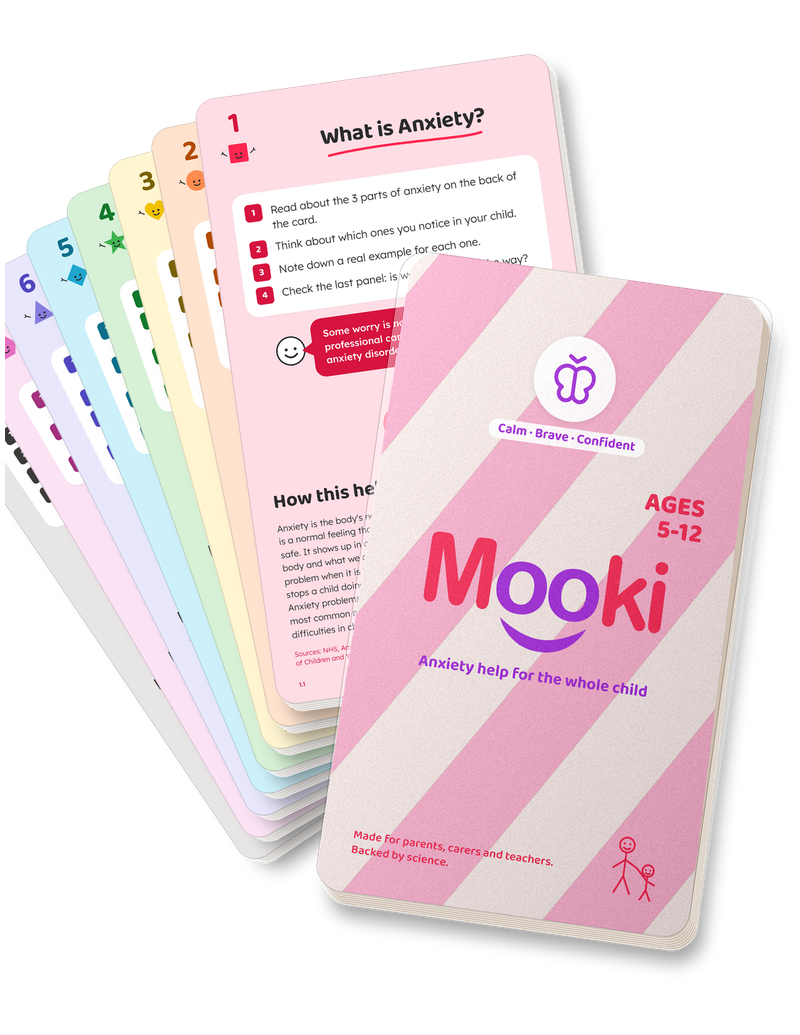
Simple calming cards to grow with your child
The Mooki Anxiety deck is designed for ages 5 to 12, but simple cards like Easy Goodbyes, Calm Together and Feelings Check-in are easy to adapt for younger children. Each is one of 56 ten-minute activities.
Instant download · use on a phone or tablet, or print and fill in at home or school
Gentle routines for home and nursery
Young children feel safer when life is predictable. Simple routines lower the number of surprises and give your child a sense of control.
At home
- Keep a steady rhythm for meals, naps and bedtime.
- Talk about what’s next using simple words: “First breakfast, then shoes, then nursery.”
- Use picture cards for the morning and bedtime routine.
- Name feelings: “You look worried about the dog. That’s OK. I’m here.”
- Praise brave steps, however small. The NHS advice on dealing with child behaviour suggests being specific about what you liked.
- Play actively every day. The NHS recommends that children aged 3 to 4 are active for at least 180 minutes a day, including at least 60 minutes of more energetic play. See the NHS physical activity guidelines for under 5s.
At nursery or preschool
- Visit before the first day if you can, and look at photos of the room and staff.
- Keep goodbyes short and warm. Long, drawn-out goodbyes can make it harder. A cheerful wave helps, even if you feel wobbly inside.
- Send a comfort object, such as a small toy or something that smells of home.
- Ask for a key person your child can go to, and share what helps your child calm down.
- Agree a plan with staff for drop-off, so everyone does the same thing.
Supporting your child without feeding the fear
It’s natural to want to protect your child from anything scary. But if we always avoid the scary thing, children don’t get the chance to learn that they can cope.
- Stay calm yourself. Young children watch your face for clues about whether something is safe.
- Take small steps. If your child is scared of dogs, start with a picture book, then watch a dog from across the park.
- Avoid big reassurance loops. Give one calm answer, then change the subject or move on to something fun.
- Don’t force it. Small, gentle steps work better than pushing your child into a situation they’re not ready for.
When to get help: UK and US
Talk to someone if your child’s fears are severe, last for more than a few weeks, or stop your family from doing everyday things. The NHS suggests speaking to your health visitor if separation anxiety causes a lot of distress or lasts more than a few weeks.
In the UK: your health visitor and GP are the first people to talk to. Your child’s nursery can also help, and the setting’s SENCo can look at support if your child has additional needs. Read more about help for children with special educational needs.
In the US: talk to your pediatrician. If you have concerns about your child’s development, ask about an evaluation. For children aged 3 or older, the CDC’s Act Early advice is to call any local public elementary school, even if your child doesn’t go there, and ask for an evaluation for preschool special education services. These services come under IDEA, the US special education law.
The bottom line
Fears are a normal part of being 2, 3 or 4, and most are outgrown with time, patience and lots of cuddles. Watch for patterns rather than single bad days, keep routines steady, and praise every brave step. If you’re worried, talk to your health visitor, GP or pediatrician. You know your child best.