This guide is for parents and teachers who want to know what speech and language therapy for autism looks like, and what good support should feel like for your child. You’ll learn what a therapist does, how communication aids help, and simple ways to connect at home.
Speech and language therapy can help autistic children understand others, express themselves and enjoy communicating. The best therapy respects who your child is and builds on how they already communicate.
Starting from respect: a neurodiversity-affirming view
Autism is a lifelong difference in how a person experiences the world and communicates. Many autistic people prefer identity-first language, such as “autistic child”. A large UK survey of the autism community (Kenny and colleagues, 2016) found that the word “autistic” was endorsed by many autistic adults and parents.
A neurodiversity-affirming approach means:
- All communication counts. Words, gestures, signs, pictures, devices and behaviour are all ways of communicating. The National Autistic Society says all forms of communication are valid.
- The goal is connection, not “acting less autistic”. Good therapy helps your child be understood and understand others. It doesn’t force eye contact or try to stop harmless differences.
- Your child’s interests are a strength. A love of trains or animals is a great way into talking.
What does a speech and language therapist do for an autistic child?
A speech and language therapist (SLT), called a speech-language pathologist (SLP) in the US, can help with:
- Understanding: following instructions, questions and new words.
- Expressing: asking for things, saying no, sharing ideas and feelings.
- Social communication: taking turns, sharing attention and joining in play.
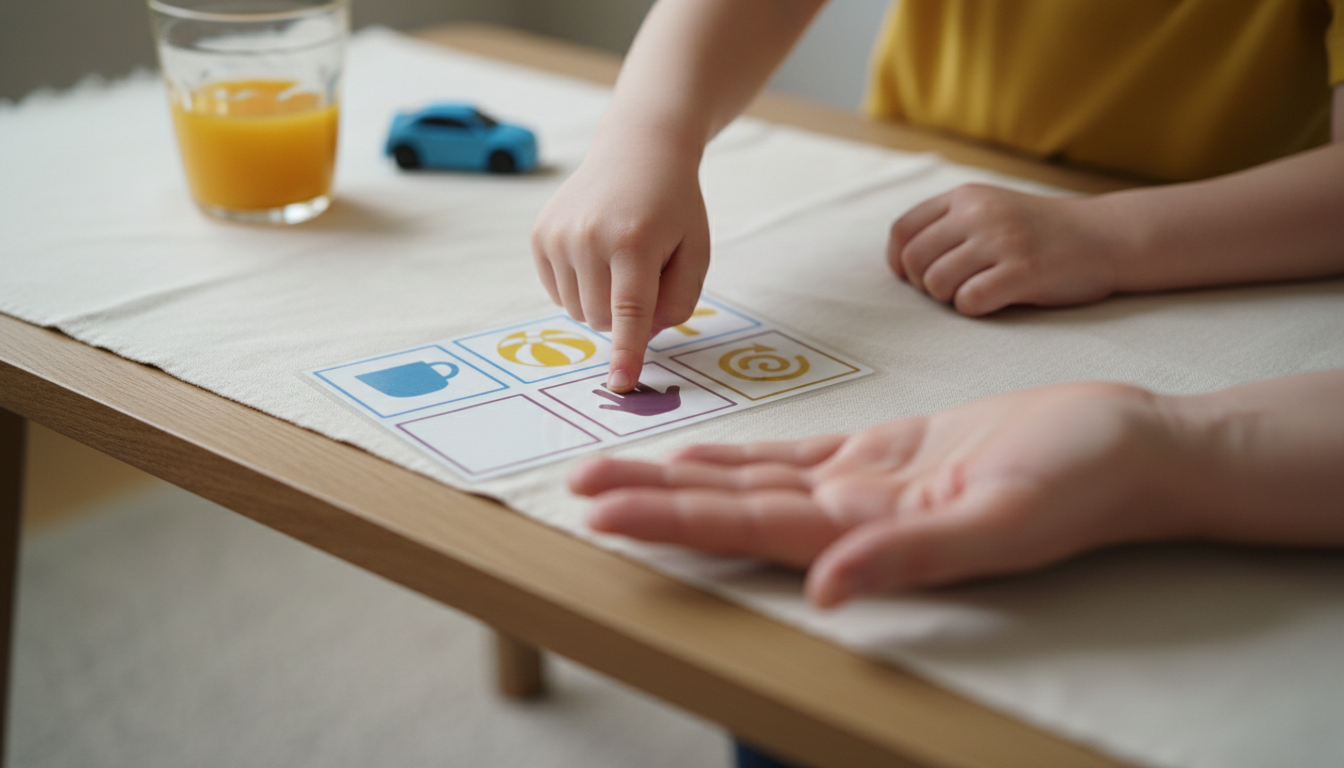
- Alternative communication: using signs, pictures or devices.
- Supporting the adults: coaching parents, carers and school staff.
In the UK, NICE guidance on supporting autistic children recommends considering a social-communication intervention. It describes play-based strategies with parents, carers and teachers to build shared attention, engagement and back-and-forth communication. It also stresses helping adults become more responsive to the child’s own way of communicating.
So much of the work happens through you. The therapist will often show you what to do, then help you use it in everyday life.
Try it today: 10 minutes of follow-their-lead play
- Choose a time when your child is calm. Join them in something they love.
- Get down to their level and copy what they do, such as stacking blocks or spinning a wheel.
- Comment rather than ask. Say short words that match the moment: “Up, up, up!” or “Crash!”
- Wait. Count to ten in your head and see if your child looks, gestures, makes a sound or says a word.
- Respond warmly to whatever they do, and add a word: if they reach for bubbles, say “Bubbles!” and blow some.
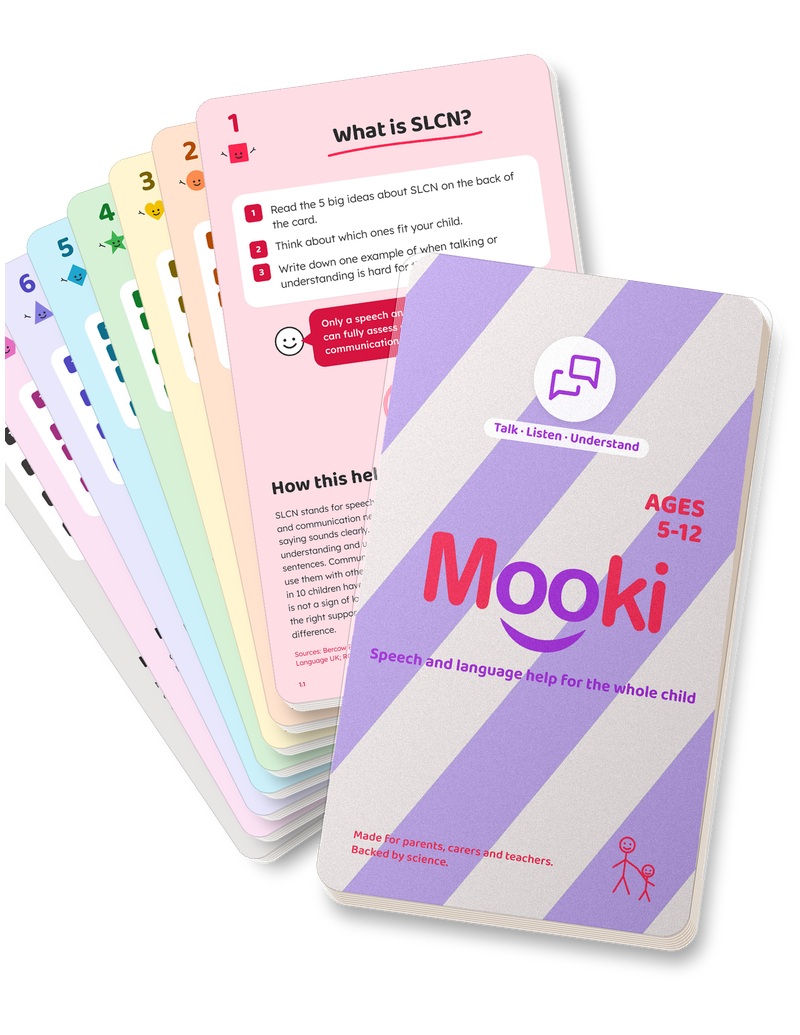
Want simple ways to connect and communicate?
Our Comment Don't Quiz, Wait and Listen and Offer Choices cards turn follow-their-lead play into easy daily habits. They're three of 56 ten-minute activities in the Mooki Cards Speech and Language deck.
Instant download · use on a phone or tablet, or print and fill in at home or school
AAC: will it stop my child from talking?
AAC stands for augmentative and alternative communication. It includes signing, picture cards and talking apps or devices. The National Autistic Society gives picture-based systems and high-tech communication devices as examples.
Many parents worry that AAC will make their child stop trying to speak. Research is reassuring. A systematic review by Schlosser and Wendt found that AAC does not hold back speech in autistic children. Most studies found a small increase in speech.
AAC gives your child a voice right now, which can reduce frustration. For some children, it becomes their main way of communicating, and that is fine too. The National Autistic Society also says facilitated communication is not recommended.
Echolalia and gestalt language processing
Some autistic children repeat words or phrases, sometimes straight away and sometimes days later. This is called echolalia. It might be a line from a favourite show or something you said at bath time.
These phrases often have meaning. Speech and Language UK explains that memorised phrases can help children learn, give them time to think, or calm themselves.
You may also hear about “gestalt language processing”. This is a theory that some children learn language in whole chunks. Speech and Language UK notes that professionals disagree about it and there isn’t enough research to support it yet. Ask your therapist how they’d support your child and why.
Finding the right speech and language support
Speech and language goals for autism: what good looks like
Good goals are meaningful to your child’s daily life. Examples might include:
- Asking for help or a break, in any way.
- Making choices at snack time, using words, signs or pictures.
- Taking a few turns in a favourite game.
- Telling an adult when something hurts or feels wrong.
- Understanding a visual timetable for the school day.
Questions to ask a therapist:
- How will you get to know my child’s interests and strengths?
- How will we know therapy is working?
- What can I do at home and at school?
- Will you support AAC if my child needs it?
Getting speech and language therapy in the UK and US
In the UK: ask your GP, your local autism team or your child’s school. The NHS guide to supporting an autistic child suggests asking about speech and language therapy. At school, talk to the SENCo about SEN support. If your child needs more help, ask about an EHCP (education, health and care plan).
In the US: talk to your pediatrician. Children under 3 can get help through early intervention. For children aged 3 and over, speech-language therapy can be part of an IEP at school.
If you’re worried about your child’s communication, talk to your GP or paediatrician, or your child’s school.
The bottom line
Speech and language therapy for autistic children works best when it respects how your child communicates and builds from there. Look for a therapist who values your child’s interests, includes you and supports any way of communicating that works. Every look, gesture, sign and word is a connection worth celebrating.