- feel secure
- build resilience
- develop confidence
- grow in self-esteem
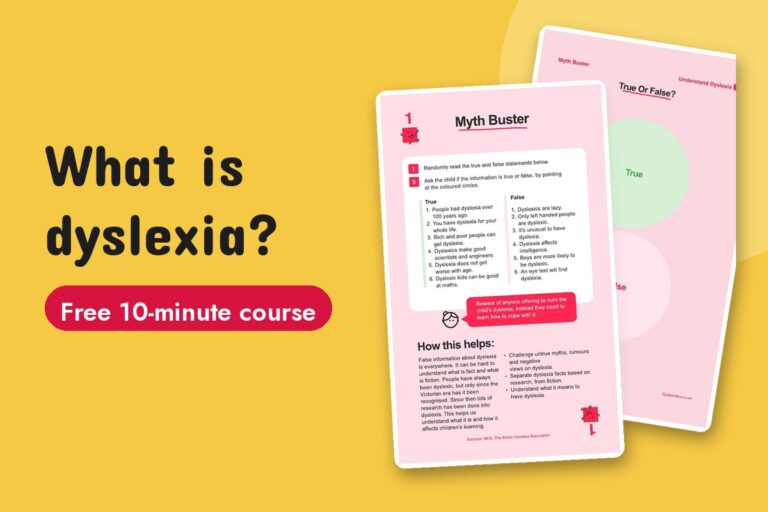
Free 10-minute course
Help a child understand their dyslexia
Explain dyslexia simply and positively, in 3 short activities. 10 minutes a day, with free printable worksheets.
Try it today
- Take 10 minutes – do one thing just for you, like a cup of tea in a quiet spot.
- Say something positive – tell your child one thing they are good at.

Want a self-care plan you can follow?
The Adult Champion card has ready-made self-care steps for you on the front and a picture activity for your child on the back. Everything is in one place. It’s one of 56 ten-minute activities in the Mooki Cards deck.
Instant download · use on a phone or tablet, or print and fill in
Supporting dyslexic children
Get advice below from the Dyslexic Mum about how important it is for a dyslexic child to have a supportive adult in their life:
“Every child deserves an adult that will never give up on them” Rita Pierson
“Did you have a role model in your life, an adult who supported and inspired you? For a child to succeed in life, they need someone who will invest time and energy in them. My role model was my grandmother. She helped me grow up believing I could go on to achieve great things.
Caring for a dyslexic child can be challenging. To be a strong adult champion for a child, it is important to take care of yourself. You need to be relaxed, refreshed, and maintain good mental health to support them.”
Watch the clickable video ‘Adult champion’ below, where the Dyslexic Mum discusses self-care for carers of dyslexic children.
Look after your wellbeing
Follow the top tips from the Dyslexic Mum below:
- Adult Champion – The most valuable gift you can give a child is your love, time and attention. Showing them that you care, that you want to help them, will make them feel special and secure.
- Positive Thinking – Help a child have a positive outlook on life by focusing on what they are good at doing. Be positive about life’s challenges, listen and support them. This builds resilience and trust in a child, leading to healthier, happier relationships.
- Rest and Recover – Supporting a dyslexic child can be tiring and hard work. Take time for yourself, even if it is just 10 minutes a day. Stop worrying if you are doing a good job. The fact you care and show it is enough. You are enough.