
Learn how to create a calm corner to help dyslexic children learn better.
A calm corner is a dyslexia-friendly space where a child has the freedom to express themselves while learning. They are given permission to:
- move around
- fidget and stretch
- stare out of the window
- take regular breaks
The idea is based on research. Learn more in “Nurturing inner calm in children”.
Create a dyslexia-friendly environment
“Dyslexic children need to be able to talk and ask questions while learning. An environment where they are told to be quiet can negatively affect their learning.
In the classroom, it may seem like a dyslexic child is not listening or learning. They might stare out of the window or stop working while their brain processes information. The child needs to be given the freedom to do this, along with regular breaks to stop them becoming overwhelmed.”
Watch the video ‘Create calm corner’ below. The Dyslexic Mum gives top tips on how to create a calm learning corner:
6 ideas for a calm corner
Use these ideas from the Dyslexic Mum to help a dyslexic child learn:
- Quiet – find a place with little noise or music.
- Comfort – get away from the desk and sit on cushions instead.
- Calm – slowly count to 10, sitting with eyes shut.
- Breaks – take a break every 10–15 minutes.
- Move – stretch your arms and legs.
- Focus – gaze out of the window or look around the room.
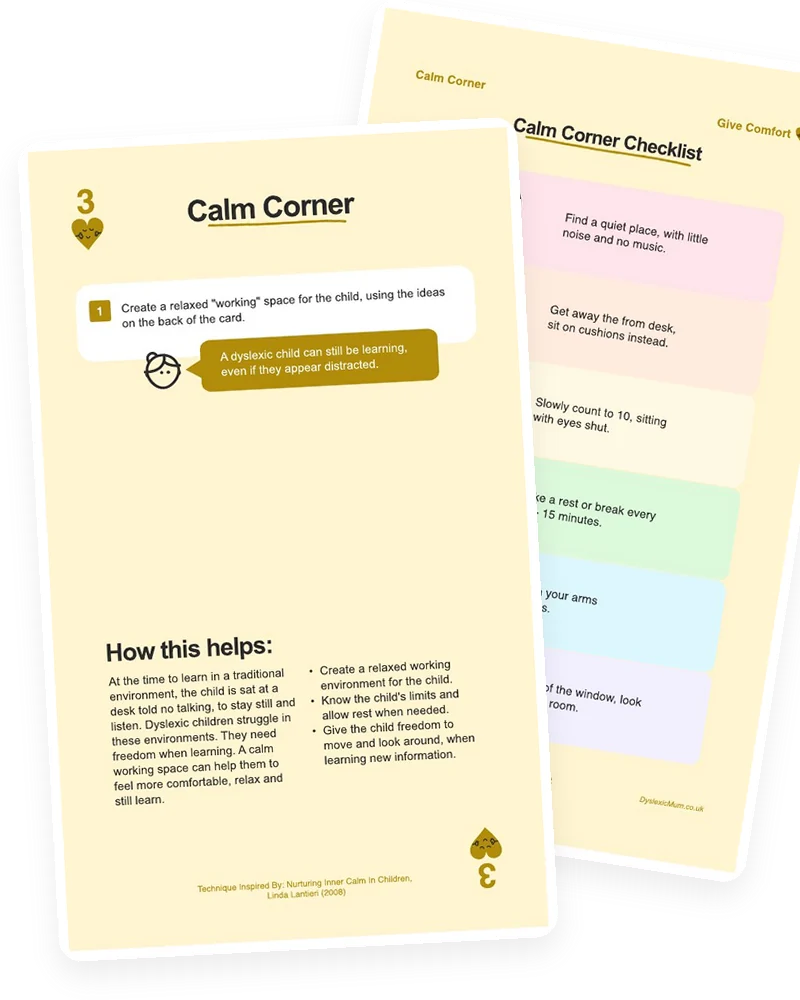
Want to set up a calm corner step by step?
The Calm Corner card gives you ready-made steps on the front and a picture activity for your child on the back, so you can build the space together. Everything is in one place. It’s one of 56 ten-minute activities in the Mooki Cards deck.
Instant download · use on a phone or tablet, or print and fill in
To learn more, see “10 steps to making your classroom dyslexia friendly”.