
Help a dyslexic child to get into a good bedtime routine and sleep better.
Children need between 10 and 12 hours of sleep per night. It gives their brains a chance to process all the information they have learned during the day.
Tired children can display hyperactive, ADHD type behaviour. A good bedtime routine can help a child wind down and become calm enough to sleep.
Free 10-minute course
ADHD morning and bedtime routines
Smoother mornings and calmer bedtimes, in 3 short activities. 10 minutes a day, with free printable worksheets.
Bedtime routine
A bedtime routine helps a dyslexic child wind down before sleep.
This Mooki Cards activity is based on scientific research, on “Benefits of bedtime routine”.
Benefits of a good bedtime routine
Get advice from the Dyslexic Mum about why a good bedtime routine is important:
“A good bedtime routine helps a dyslexic child wind down before sleep. Going to bed relaxed makes a difference to how well they sleep and makes them much happier the next day. Doing the same activities signals to them that it is time to relax.
A predictable bedtime routine makes children feel safe and less scared of sleep. It helps them learn to fall asleep on their own and improves their sleep quality.”
Watch the video below, ‘Good bedtime routine’, for help and advice from the Dyslexic Mum on setting a good bedtime routine. Then read her top tips.
To help a dyslexic child wind down before bed, follow these top tips:
- 1 hour: begin the bedtime routine one hour before sleep. Show clear signs that it’s time to wind down by closing curtains and dimming the lights.
- No screens: turn off all screens, including TVs, iPads and iPhones. Digital devices give off blue light, which keeps the body from preparing for sleep.
- Feel safe: a child needs to feel safe to sleep well at night. If they feel scared, they might wake up often. Help them feel secure by letting them bring teddies to bed. Use a night-light, and stay in the room until they fall asleep.
- Talk: dyslexic children often have many thoughts and ideas before bed. They may need to share these. Have a chat with them about their day and answer any questions they might have.
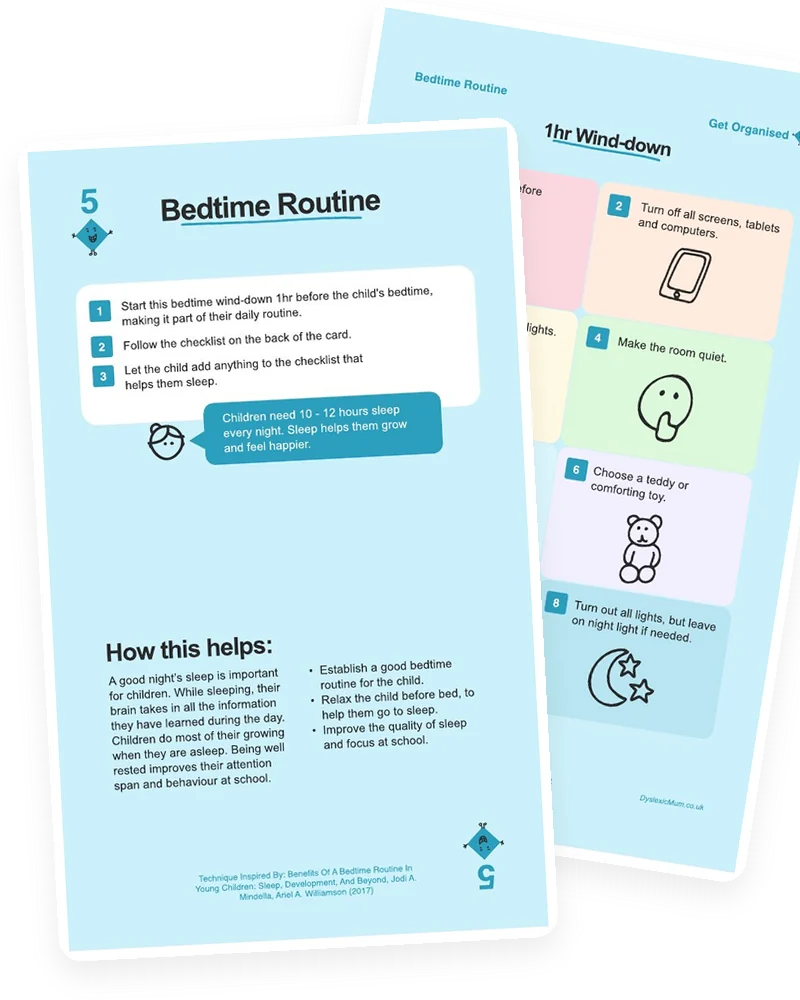
Want a bedtime routine your child can follow?
The Bedtime Routine card has ready-made steps for you on the front and a picture activity for your child on the back. Everything is in one place. It’s one of 56 ten-minute activities in the Mooki Cards deck.
Instant download · use on a phone or tablet, or print and fill in