
3 minute read · By Collette, SEN mum and teacher
Falling apart after school? Do this.2 minutes
- Stop for a break first: food, a drink and movement before anything else.
- Hold the questions. No “How was your day?” yet. Just be close.
- If there’s homework, do just the first tiny step. Set a timer for 10 minutes. When it rings, you stop.
If after school is becoming unmanageable, like hitting out or your child hurting themselves, you don’t have to cope alone. See getting extra help below.
Words that help
You’re not doing anything wrong. Falling apart at home often means your child feels safe with you. It’s where they can finally let go.
Fifteen minutes of calm is enough to start. Below you’ll find a cosy calm moment, ideas to try on a calmer day, and other parents who really understand.
Why is after school so hard? The quick answer
They’ve held it in all day
Many children squash down their feelings at school. When they get home, the spring lets go.
Home is the safe place
Falling apart at home means your child feels safe enough with you to let it out.
Quiet first, questions later
Questions about school can feel like more work. Most children talk more once they’ve had time to recharge.
Tonight, and on calmer days
Help to make after school calmer
Three calm things help your child land after school.
From Mooki Cards · On your phone · Nothing to print
1. A 15-minute calm moment15 minutes
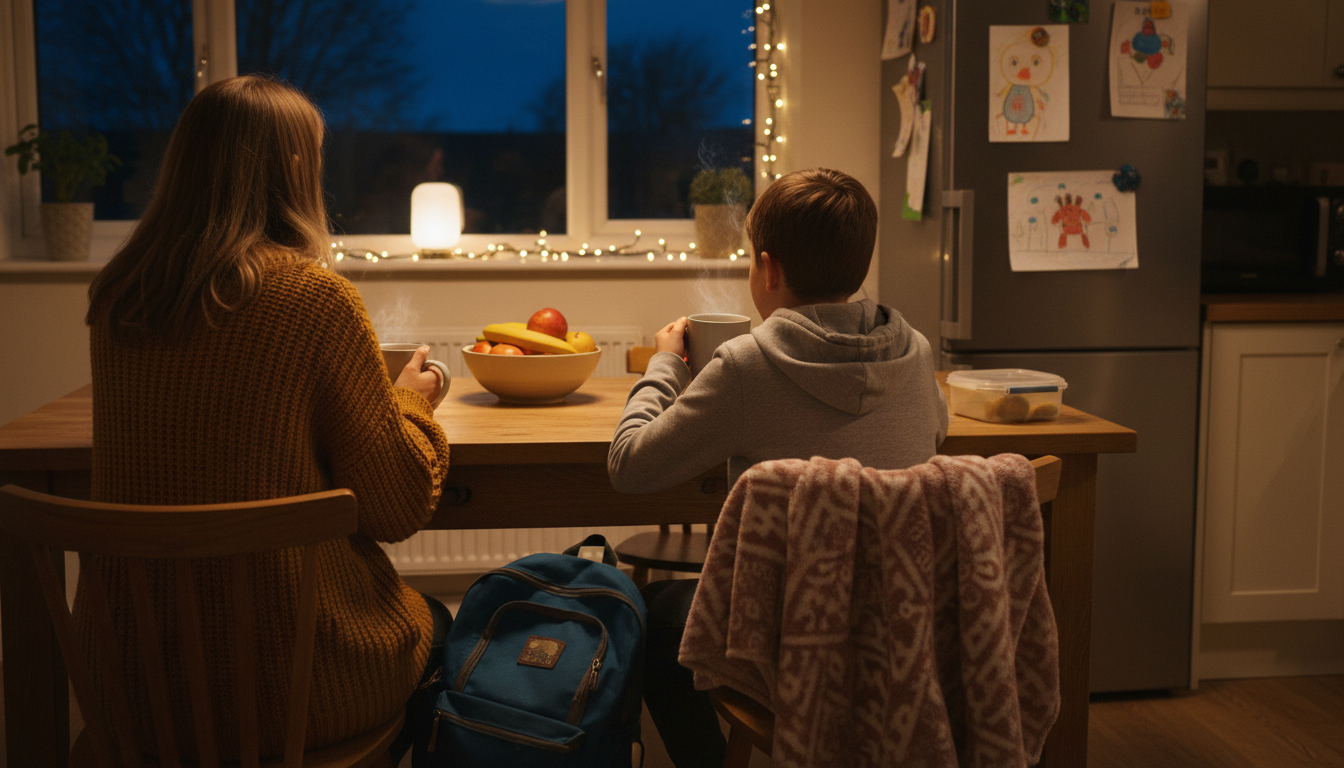
- Dim the lights. Switch off the big light and use a lamp or fairy lights.
- Make something warm. Hot chocolate, warm milk or a fruity tea.
- Get cosy. A blanket, cushions on the floor, slippers on.
- Do one quiet thing together. Draw, build or read. The chat often comes later, on its own.
Homework can wait. If it’s causing daily distress, tell the teacher or SENCo: it’s fine to ask for less.
2. Feelings check-in10 minutes
Show your child: “Which one are you right now?”
Tap a face.
- Pick a calm moment each day, like snack time or the walk home.
- Ask your child to tap the face that fits right now.
- Say the words that come up, and ask how big the feeling is.
- Then just listen.
Name your own feelings too: “I felt nervous before my meeting, so I took a slow breath.” It shows feelings are normal.
Prefer paper? Print the check-in sheet
3. Sensory breaks10 minutes
Choose 3 or 4 breaks with your child
- Look at the breaks together and tap the 3 or 4 your child likes best.
- Plan short breaks into the day, like straight after school and before homework.
- Try each one for a week and notice how your child seems afterwards.
- Keep the ones that help them feel calm and ready.
Only use squeezes and deep pressure if your child likes them. Always let them say stop.
Prefer paper? Print the breaks sheet
When you’re ready for more
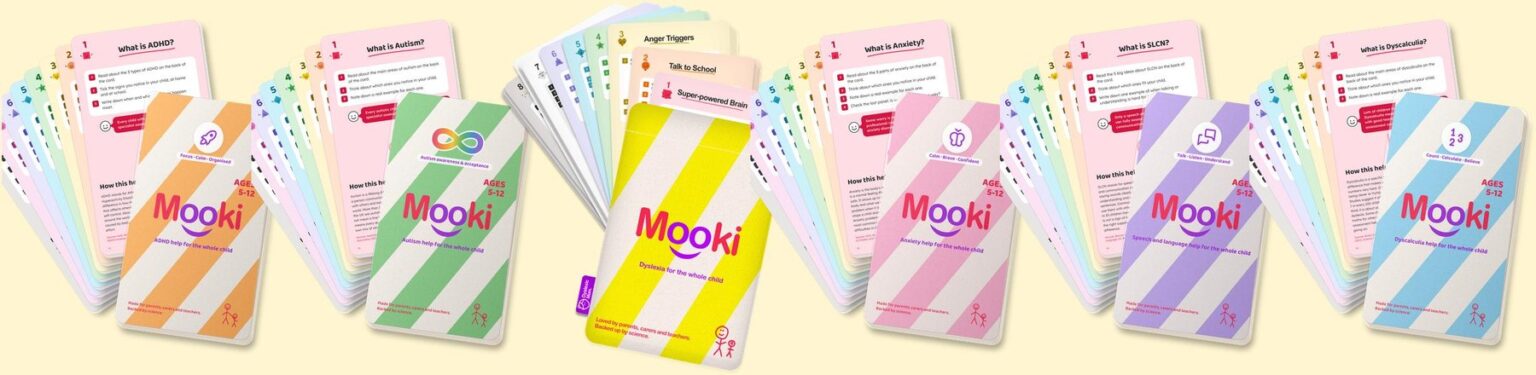
Today’s activities are from Mooki Cards
For any child with big feelings, with or without a diagnosis. There are six decks, so you can pick the one closest to what your child finds hard: ADHD, autism, anxiety, dyslexia, speech and language, or dyscalculia.
Each deck gives you:
- A section on understanding the need, in plain words, so you know what’s going on for your child.
- Calm, 10-minute activities to help, like the ones above.
- Everything on your phone, with nothing to print.
Could a special need be behind it?
Lots of children are tired and grumpy after school. But if it’s big and happens most days, it’s sometimes linked to a special educational need. Tap one to see the signs:
- Autism: masking (holding it together) all day is exhausting, and it often comes out at home.
- ADHD: a long day of sitting still and concentrating leaves nothing left in the tank.
- Anxiety: worries from the day come tumbling out once your child feels safe.
- Sensory differences: a noisy, bright school day can leave your child overloaded. These often go along with autism or ADHD.
- Dyslexia and other learning needs: working extra hard at reading and writing all day is tiring and can knock confidence.
- Speech and language needs: keeping up with talk all day takes a lot of energy.
Not sure? That’s okay, lots of parents are in the same place. You don’t need a diagnosis to use anything on this page. Our Is it SEN? guide has simple checklists. If you’re wondering, have a chat with your school’s SENCo or your GP (or health visitor for under-5s). They can talk it through with you and help you work out what’s going on.
When to get more help
If after school is a battle most days, or things are becoming unmanageable, like hitting out or your child hurting themselves, it’s time to get some extra help. These can help:
- Your GP, who can refer to CAMHS or a children’s service.
- Your school’s SENCo, and your local SENDIASS for free advice.
- YoungMinds Parents Helpline, free on 0808 802 5544 (weekdays 9.30am to 4pm), or webchat on their website.
In the US, talk to your pediatrician or school psychologist.
You don’t have to do this alone
Talk to other parents who really get it in our free Facebook group, Stressed SEN Mums: Find Your Calm. It’s a kind, friendly space to share the hard days and the small wins.