Learn how a dyslexic child can get extra help at school.
Do this by asking for an Individual Education Learning Plan (IELP).
Any struggling child can have a learning plan, even without a formal dyslexia diagnosis.
Free 10-minute course
Spot the signs of dyslexia
Know what to look for and what to do next, in 3 short activities. 10 minutes a day, with free printable worksheets.
Get dyslexic help in school
Learn more about how to get a learning plan for a child and what it should include below:
- The teacher or special educational needs coordinator (SENCO) should write the IELP. It is sometimes called a passport and varies between schools.
- The plan should include clear targets that the child is working towards. You can request one for any child who is struggling and falling behind in class.
- Having a learning plan ensures the child gets the support they need in key areas. It also helps monitor their progress and improve essential skills.
- An Individual Educational Plan (IEP) is different from an Education, Health and Care plan (EHCP). An EHCP must be written by your local authority and can provide funding for special equipment or additional teaching support.
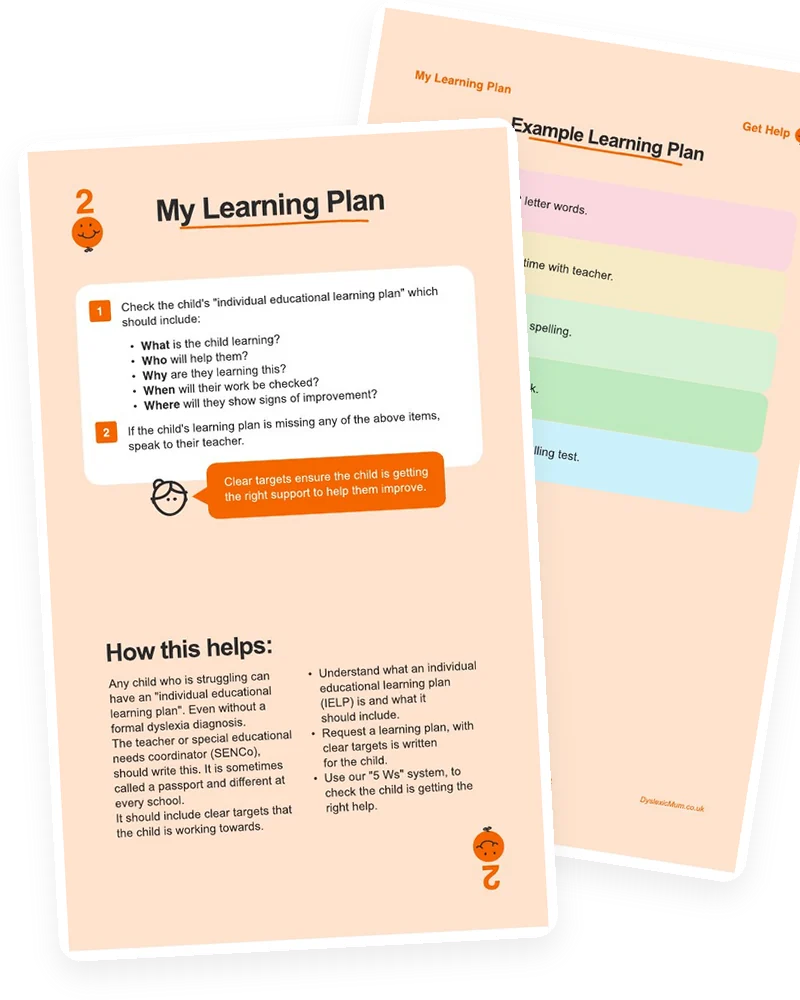
Want help planning your child’s learning?
The My Learning Plan card gives you ready-made steps on the front and a picture activity for your child on the back. Everything is in one place. It’s one of 56 ten-minute activities in the Mooki Cards deck.
Instant download · use on a phone or tablet, or print and fill in
If you are struggling to get your child’s teachers to provide extra support or are unsure how to request help for dyslexia, read our “How to speak to teachers” guide for advice.