Whether your 2 year old has been diagnosed with autism, or your child is 3, 5 or 10, the first weeks can feel like a whirlwind. This guide walks you through your feelings, telling family, getting support at school and looking after yourself.
First, the most important thing: your child is the same child they were the day before the diagnosis. The AAP’s words of support for parents make this point clearly. What has changed is that you now have a key to understanding them better.
How you might feel after the diagnosis
There is no right way to feel. Parents often describe a mix of:
- Relief: “I knew something was different, and now people believe me.”
- Sadness or grief: for the future you had pictured.
- Worry: about school, friendships and what lies ahead.
- Guilt: wondering if you caused it (you didn’t).
- Love and fierce protectiveness.
Some parents find the “5 stages of grief” (denial, anger, bargaining, depression, acceptance) helpful for naming their feelings. Others don’t relate to it at all. Feelings come and go in waves, and that’s normal. Give yourself time.
If low mood or anxiety stays with you for weeks, talk to your GP or doctor. Asking for help is a strength.

Your first steps in the first few weeks
- Read the report slowly. The NHS says your diagnosis report should describe your child’s strengths and the areas where support may help. Highlight anything you don’t understand and ask.
- Ask about follow-up. You may be offered a follow-up appointment a few weeks or months later. Write your questions down beforehand.
- Find out what’s local. Ask your GP or local autism team about parent courses, speech and language therapy and occupational therapy. The NHS has more on supporting an autistic child.
- Connect with other families. The NHS lists autism charities and support services, including parent helplines.
- Start a folder. Keep the report, letters and notes from every meeting in one place, with dates. It saves a lot of stress when you’re asked the same questions again.
- Don’t try to do everything at once. Pick one or two things to start with, such as a parent course and a meeting with school, and leave the rest for later.
In the US, ask for a copy of the evaluation report and go through its recommendations with your pediatrician. The AAP explains what happens next, including Early Intervention for children under 3 and school district services from age 3.
Telling family and friends
You decide who to tell and when. Some parents tell everyone straight away. Others wait until they feel ready. A few tips:
- Keep it simple: “Ella is autistic. Her brain works in a different way. Noise and change are hard for her, and she’s brilliant at puzzles.”
- Tell them how to help: “Please give her a warning before you visit,” or “She may not hug you, and that’s OK.”
- Expect mixed reactions: some people will say unhelpful things. Often it comes from not knowing much about autism.
Talking to your child
How and when you tell your child depends on their age. For a 2 or 3 year old diagnosed with autism, you can start using positive, simple words about their brain as they grow. Older children often feel relieved to have a name for how they feel. Keep it positive and talk about strengths.
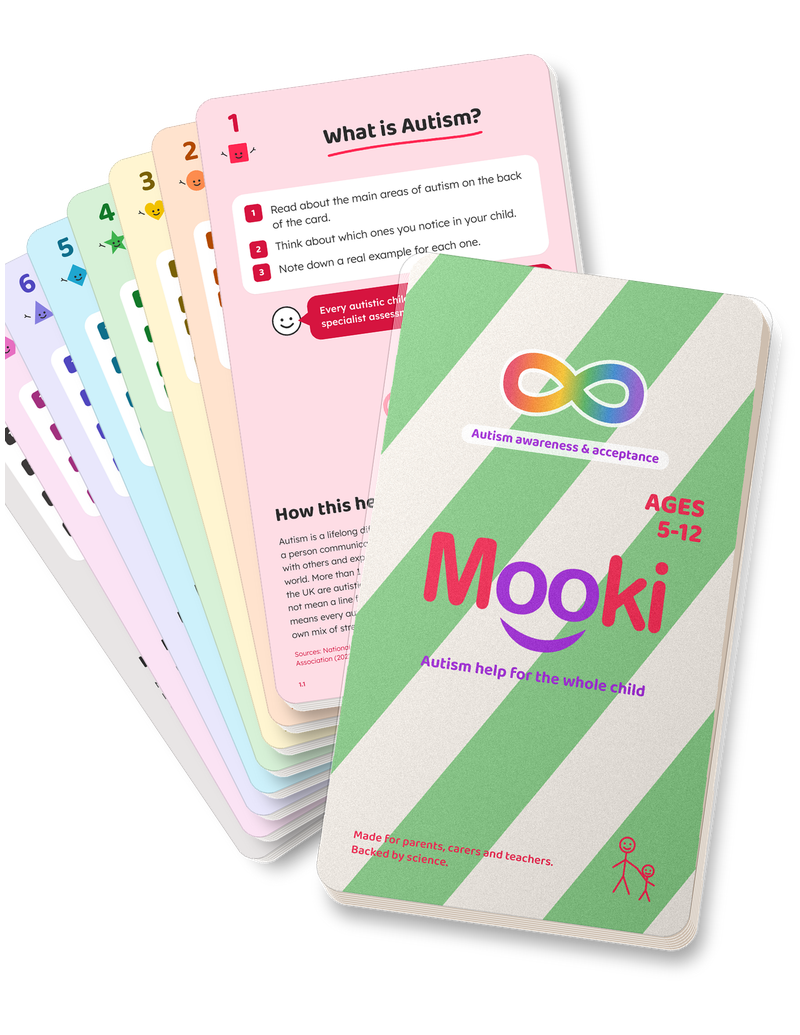
Want a gentle daily routine to connect with your child?
Special Interests, Feelings Check-in and Look After You give you short, calm moments together and a little care for yourself. Each is one of 56 ten-minute activities in the Mooki Autism deck.
Instant download · use on a phone or tablet, or print and fill in at home or school
Getting support at school or nursery
In the UK
Share the diagnosis report with your child’s nursery or school and ask to meet the SENCo. Your child may get SEN support in school. If they need more help than the school can usually give, you can ask your local council for an EHC needs assessment, which may lead to an education, health and care plan (EHCP).
A diagnosis isn’t needed to get SEN support, but it can help everyone understand your child’s needs.
In the US
From age 3, contact your school district to ask for an evaluation for special education. Your child may qualify for an IEP (Individualized Education Program) or a 504 plan. Understood explains the difference between IEPs and 504 plans clearly.
Try it today: 10 minutes of connection
In the middle of appointments and paperwork, it’s easy to forget to just enjoy your child. Try this today.
- Put your phone away and set a timer for 10 minutes.
- Let your child choose what to do, especially something linked to their favourite interest.
- Join in their way: line up the cars, copy their sounds, watch the spinning wheel together.
- Describe, don’t direct: “You’re putting the red one first.”
- End with praise: “I loved playing trains with you.”
Doing this daily builds connection, trust and communication, and it reminds you of the child you know and love. The AAP also encourages families to make time for things that bring the whole family joy.
Looking after yourself
You can’t pour from an empty cup. Small steps make a big difference.
- Sleep and eat when you can. Simple, but it matters.
- Find your people: a friend, a parent group, or an online community of autistic adults and parents.
- Ask about a carer’s assessment from your local council in the UK.
- Take breaks: even 15 minutes alone with a cup of tea counts.
- Celebrate small wins: a new word, a calm morning, a good day at school.
The bottom line
An autism diagnosis is not an ending. It’s the start of understanding your child better and getting the right support. Go gently, take it one step at a time, and remember you are not alone. If you’re worried about anything, talk to your GP or paediatrician, or your child’s school.