
There is no single best colour of paper for dyslexia. Many dyslexic children find reading more comfortable on cream or soft pastel paper, such as pale yellow, blue or green, than on bright white. Here is what the research says, how to find the right colour for your child, and what else helps.
Coloured paper may help some dyslexic children in a few ways:
- it can cut down the glare of bright white paper
- it may ease visual stress, where words seem to blur, move or swirl on the page
- reading may feel calmer and more comfortable, so your child keeps going for longer
Visual stress is not the same as dyslexia, but some dyslexic children have both.
Free 10-minute course
Help a dyslexic child learn word sounds
Fun sound puzzles, in 3 short activities. 10 minutes a day, with free printable worksheets.
Coloured paper for dyslexia: which colour?
Every child is different, so the best colour is the one that makes reading most comfortable for your child. Popular choices include:
- Cream or off-white – a softer, low-glare alternative to bright white
- Pale yellow – a common favorite for exercise books and worksheets
- Pastel blue – some children find it calm and easy on the eyes
- Pale green – another soft, low-glare option
- Pink or peach – liked by some children who find other colours too bright
Advice about colours varies. Dyslexia Scotland explains why, and why it’s best to let each person choose.
Try it today: the 10-minute colour test
- Print one page (2 minutes). Print or copy the same short page of text onto 4 or 5 different coloured papers, plus white.
- Read each one (5 minutes). Ask your child to read a few lines from each sheet.
- Ask, don’t guess (2 minutes). Which one feels easiest? Do the words stay still? Is any one too bright?
- Try it for a week (1 minute to set up). Use the favorite colour for homework, then check in. Is reading more comfortable?
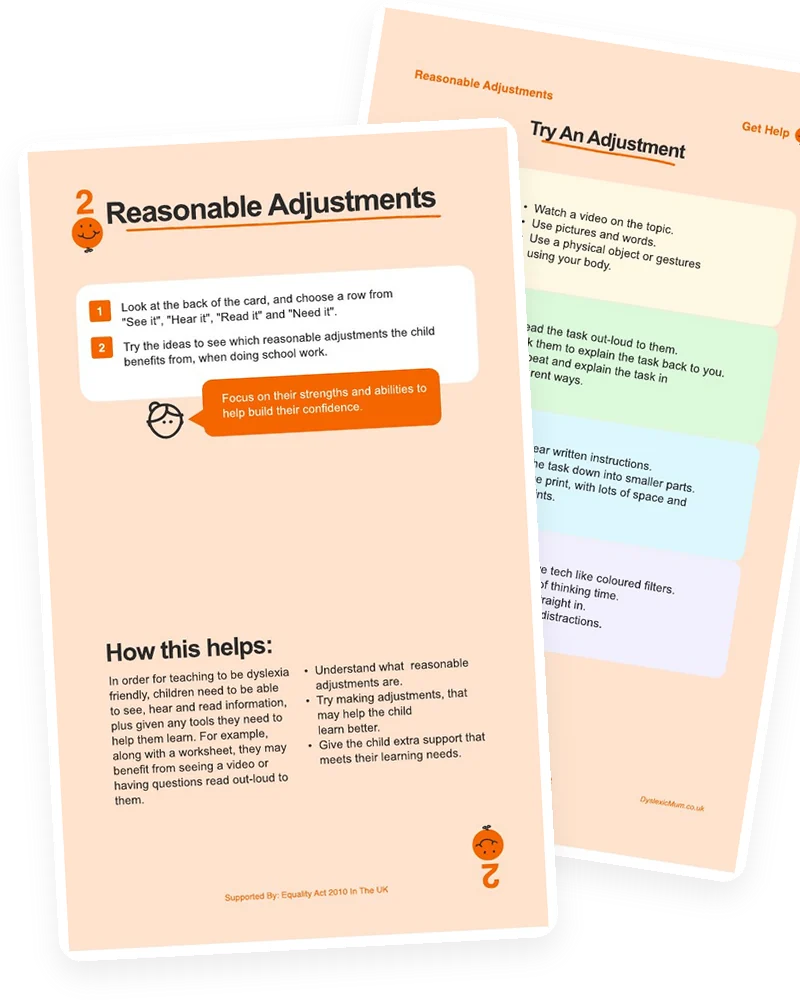
Want help asking school for changes like this?
The Reasonable Adjustments card lists simple changes that help dyslexic children at school, like coloured paper, with steps for you on the front and an activity for your child on the back. It’s one of 56 ten-minute activities in the Mooki Cards deck.
Instant download · use on a phone or tablet, or print and fill in
Do coloured papers help dyslexic children read?
Coloured paper can make reading more comfortable for some children, especially those with visual stress. But the research is mixed. Some studies show benefits and others do not, and coloured paper does not treat dyslexia itself.
So use coloured paper as a comfort aid, alongside proven ways to help your child read:
- Experiment with different colours. Let your child choose the one they like best.
- Start with short sessions. Begin with short reading times and build up.
- Watch for progress. If coloured paper isn’t helping, it may not be right for your child.
- Combine it with other help. Use dyslexia-friendly fonts, regular phonics practice and multi-sensory learning.
If your child often complains of sore eyes, headaches or words moving, book an eye test with an optometrist.
Where to buy coloured paper for dyslexia
You can buy pastel paper and tinted exercise books from most stationery stores. Specialist suppliers include:
Could it be something more?
If reading is hard work for your child even on coloured paper, look at other signs. Read about the signs of dyslexia in 5 to 10 year olds. If your child understands words when they hear them but struggles to follow what they read, or finds it hard to put ideas into words, read about speech, language and communication needs. If they can’t stay focused on a page for long, read about the 3 types of ADHD.
Helpful articles
- What colour overlay is best for dyslexia?
- 10 dyslexia reading aids to help kids read and write
- Top 10 reading pens for dyslexia
The bottom line
There is no single best colour for dyslexia. Cream and soft pastels are popular because they cut glare, but let your child choose. Use coloured paper as a comfort aid alongside reading practice. For more simple ways to help, the Mooki Cards deck has 56 ten-minute activities, including Reasonable Adjustments.