
Help an autistic child name their feelings, build a calm down kit, and get through meltdowns with less stress for everyone. 3 short activities, 10 minutes each, over 1 week.
At a glance
- Time: 3 activities, 10 minutes each, over 1 week
- You need: pens or crayons, a bag or box, and the 3 free worksheets below
- Mooki cards: Feelings Check-in, Calm Down Kit, Meltdown or Shutdown? (optional)
- By the end: you’ll have a daily feelings check-in, a calm down kit the child chose, and a plan for before, during and after a meltdown
Why meltdowns happen
A meltdown or shutdown happens when a child becomes completely overwhelmed by too much noise, change, worry or demands. It is not a tantrum or bad behaviour, and the child isn’t choosing it. Spotting the early signs and lowering demands can often help.
Before you start
- Print the worksheets. Or draw your own on plain paper.
- One a day. Do each activity on a different day.
- Calm times only. Never in the middle of a meltdown. Pick a quiet, settled moment.
- Don’t push. “I don’t know” is a real answer. Try again later.
Day 1: How do you feel?
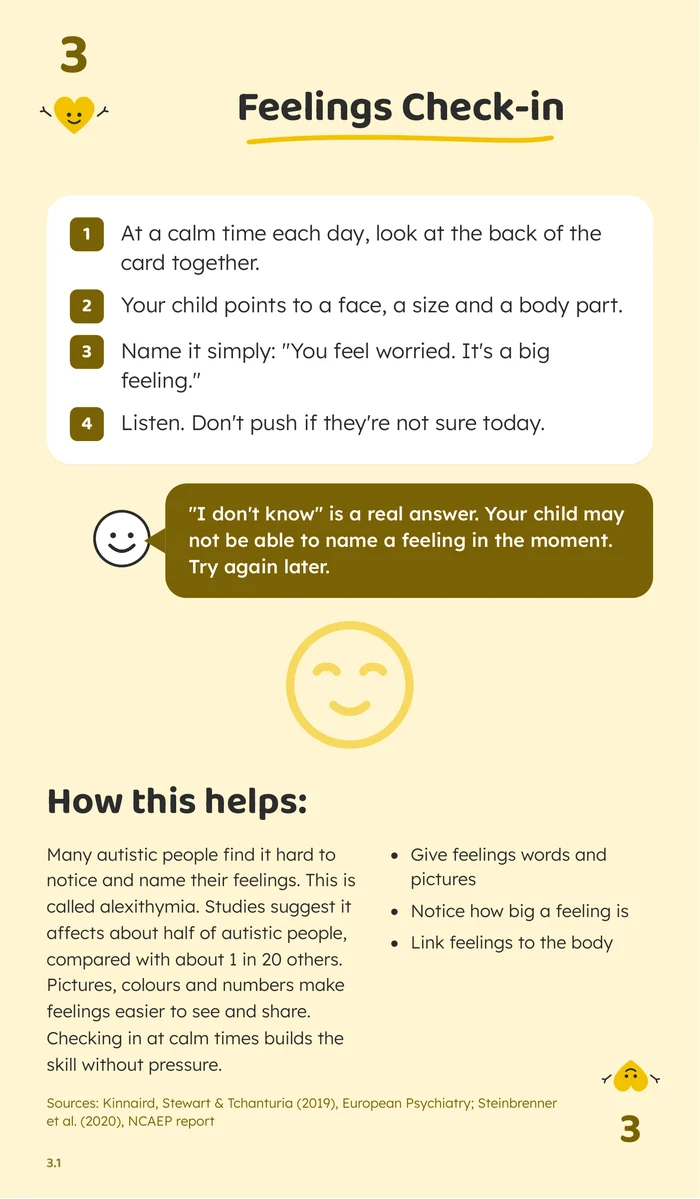
Gives feelings words and pictures, and links them to the body. Uses the Feelings Check-in card.
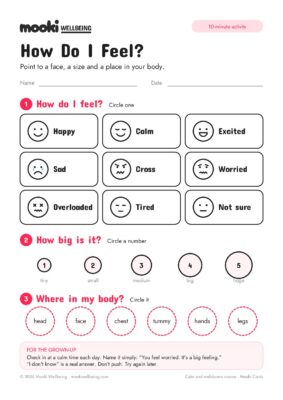
- How do I feel? at a calm time, the child points to a face.
- How big is it? they circle a number from 1 (tiny) to 5 (huge).
- Where in my body? they circle where they feel it. Name it simply: “You feel worried. It’s a big feeling.”
Tip: check in at the same calm time each day. Listen, and don’t push if they’re not sure today.
Day 2: What helps you feel calm?
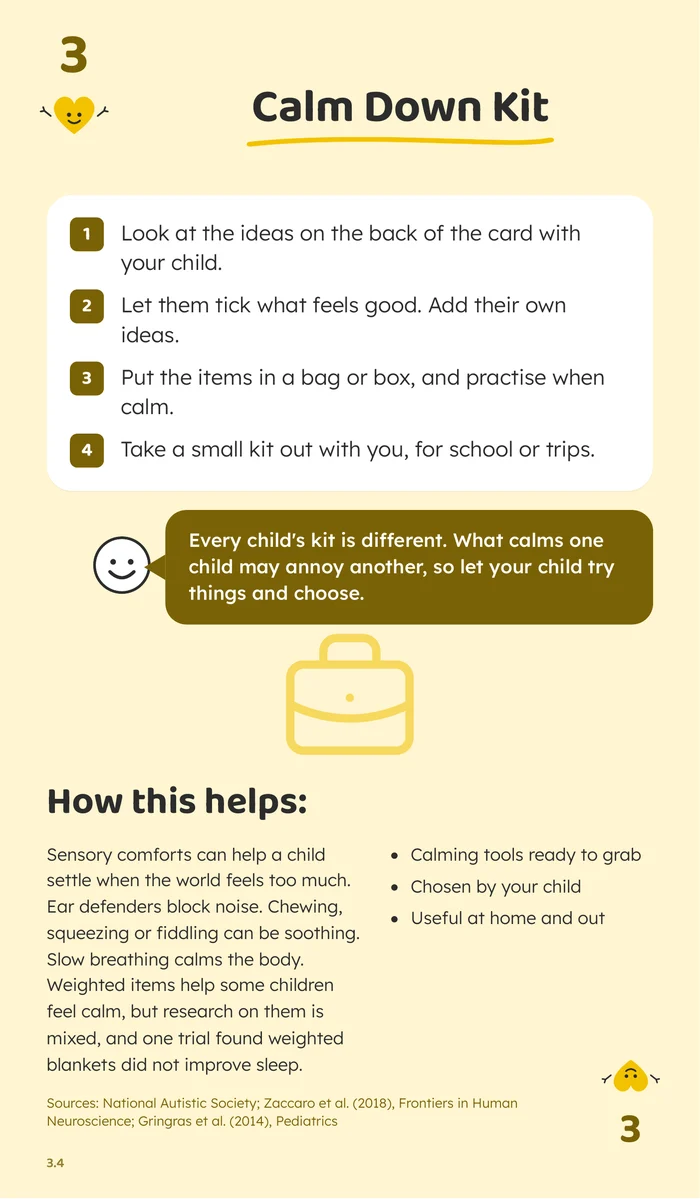
Gives the child calming tools they chose, ready to grab at home and out. Uses the Calm Down Kit card.
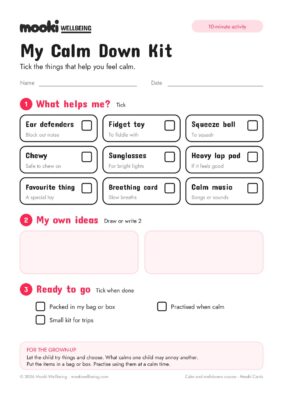
- What helps me? look at the ideas together. The child ticks what feels good.
- My own ideas: add two of their own, drawn or written.
- Ready to go: put the items in a bag or box, practise using them when calm, and make a small kit for trips.
Tip: every child’s kit is different. What calms one child may annoy another, so let the child try things and choose.
Day 3: What’s your plan for a meltdown?
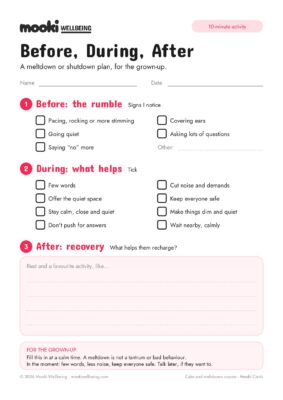
Helps you spot the early signs and respond calmly and safely. Uses the Meltdown or Shutdown? card. This sheet is for you, the grown-up.

- Before: the rumble. At a calm time, tick the early signs you notice in the child, and add your own.
- During: what helps. Tick what you’ll do: few words, less noise, keep everyone safe, wait nearby calmly.
- After: recovery. Write what helps the child rest and recharge. No telling off or long talks. Talk later, if they want to.
Tip: share the plan with anyone who cares for the child, so everyone responds the same way.
After the week: ask yourself
- Which feelings came up most, and how big were they?
- What is in the child’s calm down kit, and do they use it?
- What are the child’s early rumble signs?
Get all 3 activities, plus 53 more
The Feelings Check-in, Calm Down Kit and Meltdown or Shutdown? cards give you ready-made steps on the front and a picture activity for your child on the back. Everything is in one place. Each is one of 56 ten-minute activities in the Mooki Cards Autism deck.
Instant download · use on a phone or tablet, or print and fill in
Mooki Cards give general information and activities. They are not medical advice. If you are worried about your child, speak to your GP, health visitor or the school SENCo.