
Motivate a dyslexic child by using rewards to encourage them.
Giving rewards can boost a child’s self-esteem and help to motivate them. You can give:
- certificates
- stickers
- medals
A reward chart is a simple way to motivate a dyslexic child to learn new things and achieve great things. This idea is based on research: “Home-school support for children with dyslexia”.
Try it today: start a simple reward chart
- Pick one small goal – for example, cleaning their teeth each night.
- Draw a chart – one box for each day of the week. Put it somewhere your child can see it.
- Celebrate each step – add a sticker each time they do it, and say “Well done!”
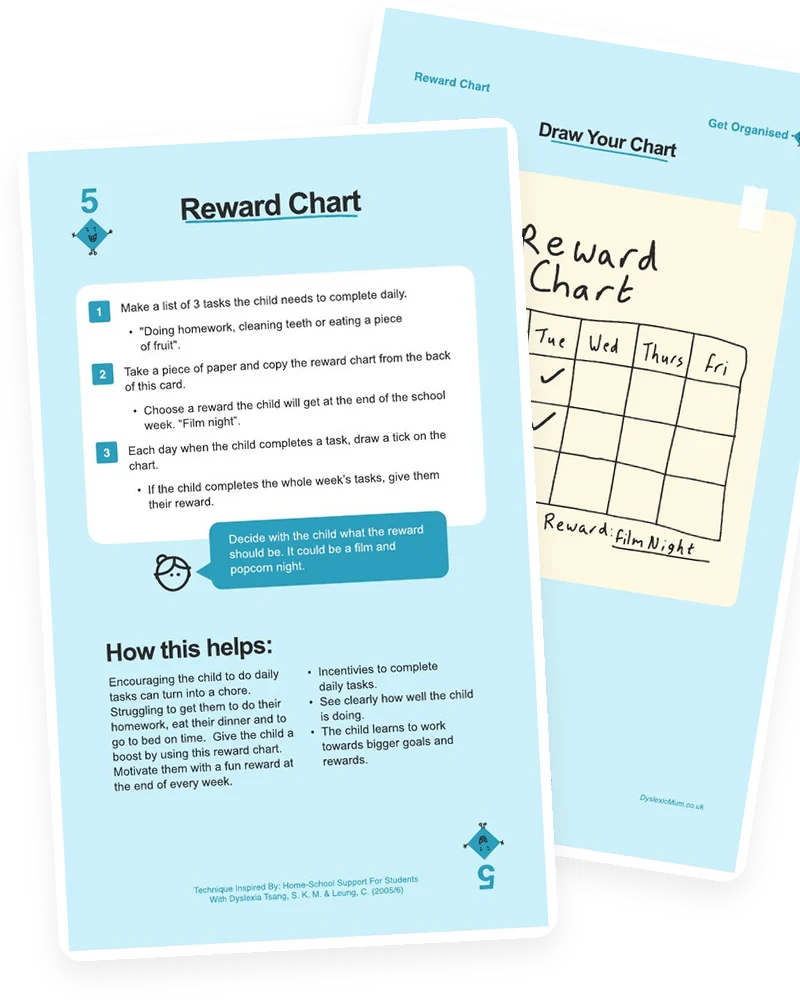
Want a ready-made reward chart your child will love?
The Reward Chart card has everything in one place: ready-made steps for you on the front and a picture activity for your child on the back. It’s one of 56 ten-minute activities in the Mooki Cards deck.
Instant download · use on a phone or tablet, or print and fill in
Motivate a dyslexic child
Get advice from the Dyslexic Mum about how rewards can motivate a dyslexic child to achieve great things:
“Kids will do anything for a sticker. My child reads extra for her dyslexia at school and earns a sticker at the end. She comes home proudly showing it off. We tell her, ‘Well done! That is amazing!’
Getting a sticker or a certificate, along with hearing ‘well done’, shows the child their efforts are special. This makes them feel proud and happy. These small moments support a child throughout life. To help my daughter focus, I used a reward chart.”
Watch the video “How to motivate a dyslexic child” below. The Dyslexic Mum shows you how to create a reward chart.
Top tips from the Dyslexic Mum for using a reward chart:
- Small goals – use the reward chart to help the child reach small goals, like cleaning their teeth each night. Big goals can feel overwhelming and may put them off. See our goal ladders guide for more on setting goals.
- Healthy rewards – rewards don’t need to be big, and they can be healthy too. They show you care and value the child’s efforts. Give stickers, homemade medals or certificates. Spending time together can also be a reward. Plan a family film night or visit the local playground.
- Not a competition – praise the child for their efforts and successes. Avoid comparing them with friends or siblings. Comparisons can make a child feel insecure or not good enough.
To learn more about the psychology of motivation, see “Maslow’s hierarchy of needs”.