
Inspire a dyslexic child by helping them discover the best careers for dyslexic thinkers.
Dyslexic children can have many strengths, including being:
- creative thinkers
- good verbal communicators
- problem solvers
These strengths make them well suited to many jobs in the future, such as being a scientist, architect or teacher.
This idea is based on research. Read “Developmental dyslexia – disorder or specialisation in exploration?”.
Try it today: from talent to job
- Ask the child what they love doing and what they are good at. It could be drawing, building, talking or sport.
- Together, think of one job that uses that talent. For example, a child who loves drawing could become an architect.
- Find out one fact about that job, or about a dyslexic person who does it.
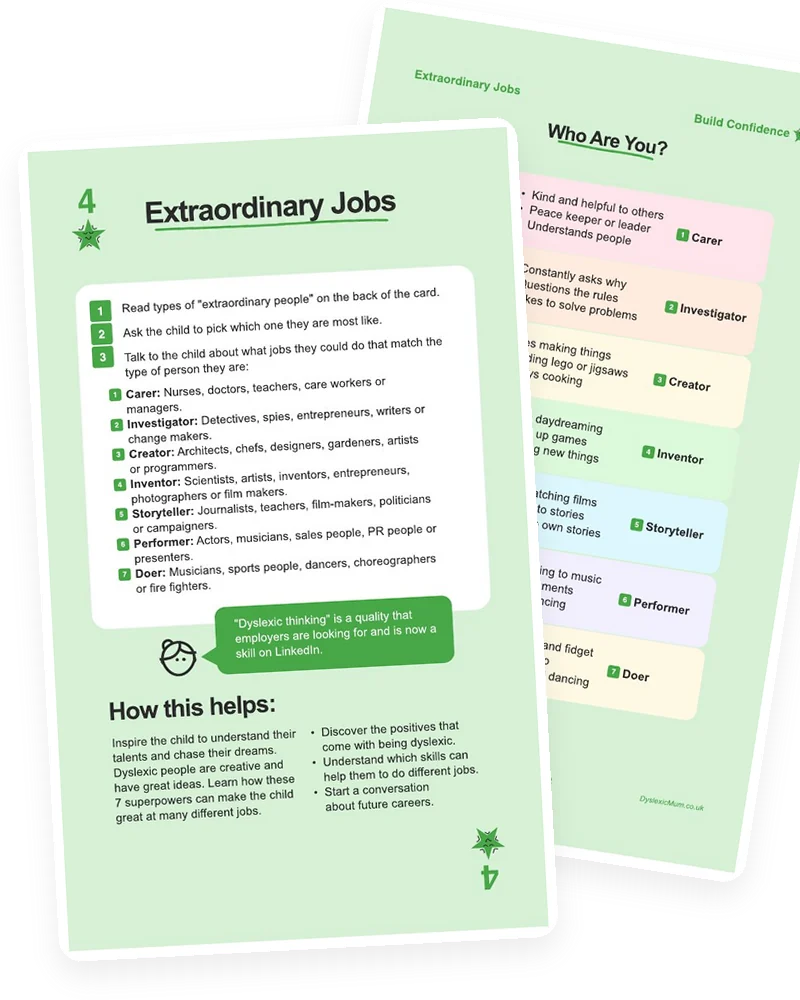
Want more job ideas matched to your child’s strengths?
The Extraordinary Jobs card gives you ready-made steps on the front and a picture activity for your child on the back, to help them link their talents to future jobs. Everything is in one place. It’s one of 56 ten-minute activities in the Mooki Cards deck.
Instant download · use on a phone or tablet, or print and fill in
Support dyslexic children’s talents
Get advice from the Dyslexic Mum about how focusing on a dyslexic child’s talents can help to inspire them.
“My child struggles at school with reading and writing, yet she excels in art. Her art teachers give her gold stars for her paintings, which is a great confidence boost. We talk about her future, how being good at art means she could pursue jobs like becoming an architect. This makes her feel happy and hopeful that she has a bright future ahead.”
Watch the video below, ‘Dyslexia talents and future jobs’.
Use these top tips when you talk about future jobs with a dyslexic child:
- Praise their talents – focus on what they are good at. This can include things they do outside of school.
- Build on their talents – school often focuses on reading and writing, so use evenings and weekends to help your child develop their talents.
- Focus on a career – if a child believes they can become a scientist, and that they have the skills to do so, they will feel more confident about their future.
- Plan a career path – if your child wants to be a chef, find out together what steps are needed to get there. Do they need to go to college or do extra training?
- Role models – talk to your child about your own career path and how you overcame hurdles. Show them dyslexic role models who have gone on to achieve great things.
Learn more in “Creative thinking and dyslexia”.