
Looking for anxiety books for kids? Here are 20 real picture books and reads about worry, sorted by age, plus simple questions to help your child talk about their own worries after reading.
Stories are one of the gentlest ways to talk about worry. A character who feels nervous, scared or stuck helps children see they are not the only one. It also gives you an easy way in: “Ruby’s worry got bigger when she kept it secret. Do you ever feel like that?” The NHS suggests using books and films about feelings as one way to help anxious children.
Free 10-minute course
Help a child with everyday worries
Name worries and shrink them down, in 3 short activities. 10 minutes a day, with free printable worksheets.
How books help kids with anxiety
- They name the feeling. Children learn words like “worried”, “nervous” and “brave”.
- They show coping. Characters breathe, talk to someone, or take a small brave step.
- They make it safe to talk. It’s easier to talk about a bear’s worries than your own.
- They show worry can shrink. Most stories end with the worry getting smaller.
Choose a calm time to read, not right after a big upset. Let your child pick books they enjoy, and read favourites again and again.
Picture books about worry (ages 4 to 7)
- Ruby’s Worry by Tom Percival (published in the US as Ruby Finds a Worry). Ruby’s worry grows bigger and bigger until she talks about it.
- The Huge Bag of Worries by Virginia Ironside. Jenny carries a bag of worries everywhere, until someone helps her open it.
- Wemberly Worried by Kevin Henkes. A little mouse worries about everything, especially starting school.
- Silly Billy by Anthony Browne. Billy worries a lot, until his grandma shares her worry dolls.
- The Worrysaurus by Rachel Bright. A small dinosaur learns to calm the butterflies in his tummy.
- Don’t Worry, Little Crab by Chris Haughton. Little Crab is nervous about going into the big sea.
- Scaredy Squirrel by Mélanie Watt. A squirrel who never leaves his tree, until something unexpected happens.
Try it today: a 10-minute book chat
After reading any worry book, spend a few minutes chatting. Pick two or three of these questions, not all of them.
- How did the character feel? Where did they feel it in their body?
- What was the character worried would happen?
- What helped the worry get smaller?
- Who helped them? Who could help you?
- Have you ever felt like that?
- What brave thing did the character do?
Then try one idea from the book together, such as telling someone about a worry, as Ruby does, or doing three slow breaths. Keep it light. If your child doesn’t want to talk, that’s fine. The story is still doing its work.
Want an activity to follow your story time?
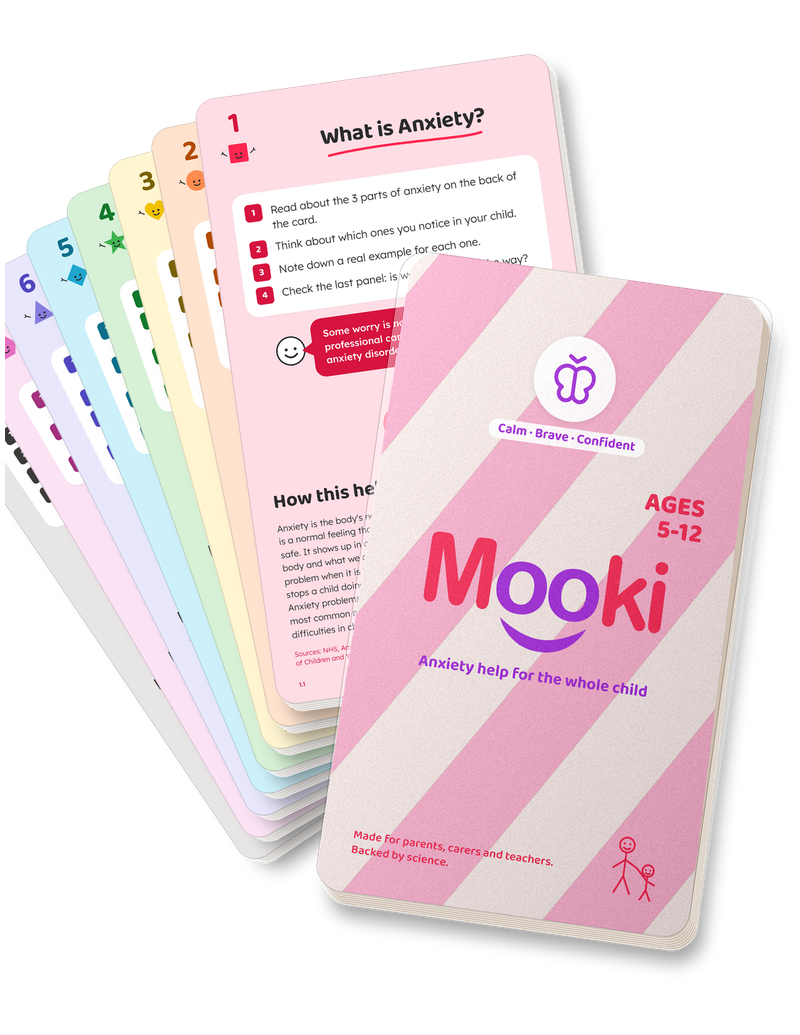
Worry Monster, Explain Anxiety and Kind Self-Talk from the Mooki Anxiety deck are easy follow-ups after a worry book. Each is one of 56 ten-minute activities with a child worksheet on the back.
Instant download · use on a phone or tablet, or print and fill in at home or school
Books about brave steps (ages 4 to 8)
- The Koala Who Could by Rachel Bright. Kevin the koala hates change and won’t leave his tree.
- Jabari Jumps by Gaia Cornwall. Jabari is nervous about jumping off the diving board, and his dad helps him take his time.
- After the Fall by Dan Santat. Humpty Dumpty is scared of heights after his famous fall.
- Hey Warrior by Karen Young. Explains the brave, protective part of the brain that causes anxiety, in child-friendly words.
- Breathe Like a Bear by Kira Willey. Short, playful breathing and calming exercises for children.
Books about separation worries (ages 3 to 7)
These help with drop-offs at nursery (preschool) and school.
- The Invisible String by Patrice Karst. An invisible string connects us to the people we love, even when apart.
- The Kissing Hand by Audrey Penn. Chester the raccoon is nervous about school, and his mum gives him a kiss to keep in his hand.
- Owl Babies by Martin Waddell. Three baby owls wait for their mother to come back.
- Llama Llama Misses Mama by Anna Dewdney. Little Llama’s first day at preschool.
Workbooks and longer reads (ages 6 to 12)
- What to Do When You Worry Too Much by Dawn Huebner. A popular CBT-based workbook that children can work through with an adult.
- Wilma Jean the Worry Machine by Julia Cook. Wilma Jean learns to sort worries she can control from worries she can’t.
- Starving the Anxiety Gremlin for Children Aged 5-9 by Kate Collins-Donnelly. A CBT activity book with games and exercises.
- Guts by Raina Telgemeier. A graphic memoir for ages 8 to 12 about tummy troubles, worry and getting help.
The Child Mind Institute’s book list has more titles, sorted by topic, with a suggested age for each book.
How to choose the right book
- Match the worry. A child nervous about school may connect more with Wemberly or Chester than with a general worry book.
- Match the reader. Younger children enjoy repetition and pictures. Older children may prefer a workbook they can write in, or a graphic novel they can read alone.
- Read it yourself first. Check the story feels right for your child, especially if they have had a hard time recently.
- Let your child lead. If a book doesn’t grab them, try another. There is no single best book for kids with anxiety.
A book for parents
Helping Your Child with Fears and Worries by Cathy Creswell and Lucy Willetts is a self-help guide based on CBT. Some NHS teams, such as this Hertfordshire mental health support team, build parent sessions around it.
When books aren’t enough
Books are a lovely support, but they are not treatment. If your child’s worries are strong, last for weeks, or stop them going to school or seeing friends, talk to your GP in the UK or your pediatrician in the US. YoungMinds and the CDC both explain how to get help. Your child’s teacher, SENCo or school counselor can help too.
The bottom line
The right anxiety book for kids can open a conversation that is hard to start any other way. Pick one or two from this list, read them often, and use a few gentle questions afterwards. Over time, the characters’ brave steps can become your child’s brave steps too.