
Give a dyslexic child strong role models. Help them learn which famous people have dyslexia by playing a fun quiz game.
Dyslexic children are more likely to grow up to become self-made millionaires. Showing them famous dyslexic role models can help motivate and inspire them.
Famous dyslexic people include:
- Steve Jobs, inventor of the iPad and iPhone
- famous musician John Lennon from the Beatles
- self-made businessman Richard Branson
Superpower People
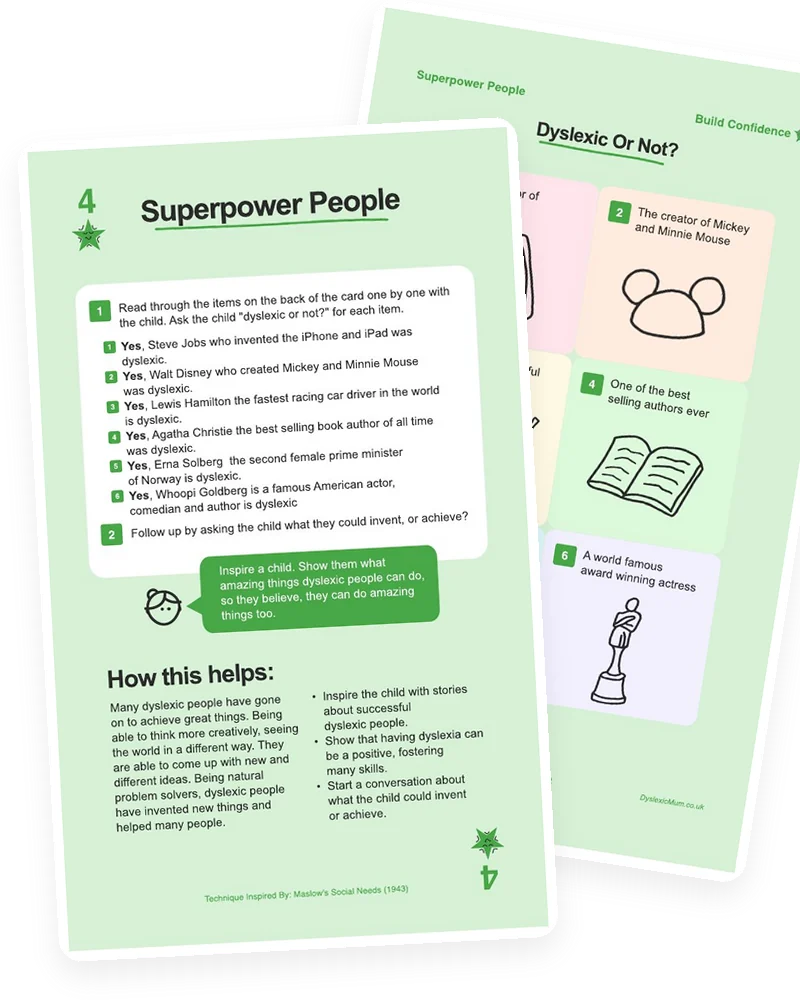
Play a “dyslexic or not?” quiz to help a child learn about famous dyslexic people and their achievements.
The Mooki Cards are based on scientific research. Learn more: “Maslow’s social needs”.
Try it today
- Name a famous person your child knows, for example Richard Branson. Ask: “Dyslexic or not?”
- Tell them the answer and what that person achieved. Then ask: “What could you invent or achieve?”
Want the full “dyslexic or not?” game?
The Superpower People card has ready-made steps for you on the front and a picture quiz for your child on the back. Everything is in one place. It’s one of 56 ten-minute activities in the Mooki Cards deck.
Instant download · use on a phone or tablet, or print and fill in
Dyslexia superpowers
Check out the top facts below about successful people with dyslexia:
- 40% of self-made millionaires are neurodiverse, compared to 15% of the population.
- Dyslexia is a type of neurodiversity that makes learning harder but boosts original, creative thinking.
- Dyslexic children may struggle at first, but once they grasp a skill, they excel.
Learn more about famous dyslexic role models, see “Made by Dyslexia Celebrity Interviews”.
Watch the clickable video below, where the Dyslexic Mum shows how to play the ‘Dyslexia Superpowers’ game:
Dyslexic thinking
Use the top tips below to speak to a dyslexic child about the positives of being dyslexic, and how it has helped many people to become famous:
- Hard working – dyslexic children find it harder to learn. They have to work much harder than other children to keep up. This means they are hard working, used to failing and resilient. These are all skills needed to be successful at work or when building a business. Remind the child about this next time they are struggling in class.
- Dyslexic thinking – on the job website “LinkedIn”, dyslexic thinking is now listed as a job skill. Some digital, technology and science companies look to employ dyslexic people, because they come up with creative ideas that other people may not have. Talk about this with the child. Tell them that they could have a bright future working for these companies.
- Role models – show dyslexic children strong role models who have overcome life’s challenges to achieve great things. This is a good way to show them that dyslexia does not need to hold them back in life. They too can be successful. See a list of “Famous Dyslexic People” for more examples.